

It has been more than three months since the United States and Israel launched their unprovoked military campaign against Iran, and more than two months since a fragile, Pakistan brokered ceasefire was supposed to take hold. Yet, despite the official cessation of large‑scale bombing, the conflict has not so much ended as it has metastasised.
What exists today is not a durable peace but a precarious suspension of major combat operations, punctuated by daily exchanges of fire, deepening regional spillover, and a diplomatic process that has all but collapsed.
The April 8 ceasefire, announced by Prime Minister Shehbaz Sharif of Pakistan, was supposed to de escalate a war that had already killed thousands and brought the global energy market to its knees. However, the truth on the ground tells a different story. Despite US President Donald Trump’s public assertions that “the war is over” and that the ceasefire is holding, both sides have continued to violate the terms of the truce. Fighting has not ceased; it has simply lowered in intensity. As Trump himself acknowledged, the US‑arranged ceasefires have resulted in “shooting in a more moderate manner,” a description that hardly inspires confidence in a lasting peace.
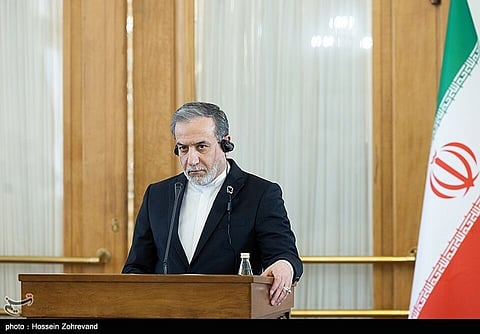
The central problem is that the ceasefire was never truly comprehensive. Iran has consistently argued that the April 8 agreement applied to “all fronts,” including Lebanon, where its ally Hezbollah has been locked in a brutal confrontation with Israeli forces since early March. When Israeli airstrikes on southern Lebanon continued, Tehran saw this as a direct violation of the ceasefire. On June 1, Iran’s Foreign Minister Abbas Araghchi warned that the ceasefire “is unequivocally a ceasefire on all fronts, including in Lebanon. Its violation on one front is a violation of the ceasefire on all fronts”. This warning was not rhetorical; it was a direct statement of intent. Shortly thereafter, Tehran suspended its participation in indirect talks with the United States, a decision that was immediately met with contradictory statements from President Trump, who claimed negotiations were still ongoing.
As Araghchi told the Lebanese Al‑Mayadeen television network, “This war will end only when it ends in Lebanon as well.” He further insisted that “the end of the war on Lebanon must be accompanied by the withdrawal of Israeli forces from the territories they have occupied”. For Tehran, the Lebanese front is not a separate conflict but an integral part of the same war. Hezbollah opened that front in early March, just two days after the US‑Israeli strikes on Iran, explicitly stating that its actions were in support of Tehran. To sever the two would be, in Iran’s view, to reward Israeli aggression while leaving its ally exposed.
Yet, on the ground, there is no sign of an Israeli withdrawal. On the contrary, the fighting has intensified. On June 3, Israeli airstrikes killed at least nine people in southern Lebanon, including two paramedics whose ambulance was directly targeted near the Chehour area. An Israeli drone strike also hit a vehicle just south of the capital, Beirut, while Hezbollah responded by firing rockets into northern Israel and targeting a gathering of Israeli troops. The next day, Israeli strikes killed four more people and injured seven, including two children, in attacks near Tyre. The same day, a United Nations peacekeeper also lost his life in the ongoing violence. Lebanon’s health ministry has reported that at least 3,526 people have been killed in the country since the war began, with more than one million registered as displaced.
In this context, Hezbollah has rejected a US‑brokered pact between Israel and the Lebanese government, which was reportedly negotiated without the group’s participation. The arrangement, according to Hezbollah, failed to provide for an Israeli withdrawal and was therefore a non‑starter. Iran’s supreme leader’s advisor, Mohsen Rezaei, has warned Israel against any expansion of military operations, particularly against the Lebanese capital. “Today, we again warn this sinister regime to leave Lebanon,” he told the semi‑official Mehr News Agency. “They should know that Lebanon will be an inseparable part of any agreement and any ceasefire”.
The fragility of the ceasefire is further underscored by the continued, low‑intensity military exchanges in the Gulf. On June 5, Iran’s navy announced that it had fired warning missiles and drones at two US destroyers in the Gulf of Oman, forcing them to withdraw toward the Indian Ocean. The Iranian military claimed it had used Qadir‑type missiles and a new type of drone to warn off the American vessels, which it accused of engaging in “maritime piracy”. The United States Central Command, however, offered a conflicting account, denying that Iranian forces had fired at US warships, while also acknowledging that US forces continue to enforce a naval blockade against Iran. This blockade, which Washington has maintained since mid‑April, is itself considered by Tehran to be a flagrant violation of the ceasefire. As Mohsen Rezaei pointed out, the United States claims it will lift the blockade if the Strait is reopened, yet the strait is currently open to commerce. “So why aren’t they lifting the blockade now?” he asked.
The conflicting narratives, Iran claiming it is defending its sovereignty, the US claiming it is enforcing international norms capture the essential instability of the current situation. The ceasefire has not prevented the two sides from trading fire but has only prevented them from escalating into a full‑scale resumption of the war. According to the UN World Food Programme, the disruption in the strait has driven up fuel and transport costs, pushing millions of people closer to hunger. Meanwhile, shipping through the Strait of Hormuz remains at a fraction of its pre‑war levels, and global energy markets remain on edge.
If the ceasefire is being violated on a daily basis, and if both sides continue to exchange fire, why has it not yet collapsed entirely? The answer lies in a combination of mutual exhaustion, strategic calculation, and the narrow bandwidth of a diplomatic process that has yet to be abandoned. Neither Washington nor Tehran appears ready to return to the full‑scale conflict that characterised the first six weeks of the war. The United States has suffered 14 confirmed military fatalities, the costs of maintaining a naval blockade are immense, and the administration is facing an uncertain domestic political environment. Iran, for its part, has endured the assassination of its supreme leader, widespread destruction of its infrastructure, and a economic blockade. Both sides have an interest in preserving a temporary pause, even if that pause is imperfect.
Moreover, diplomatic channels remain open, though barely. Despite Tehran’s suspension of direct talks, back‑channel communications through Pakistani and Qatari mediators continue. A draft memorandum of understanding, which would extend the ceasefire for 60 days and allow for the phased reopening of the Strait of Hormuz, has been exchanged multiple times. However, the sticking points remain significant. Iran is demanding the immediate release of at least $12 billion in frozen assets, a precondition it has insisted upon before any further substantive negotiations. The United States, for its part, is seeking clear Iranian commitments on the future of its nuclear programme, a demand that Tehran has repeatedly rejected as a separate issue to be addressed at a later stage.