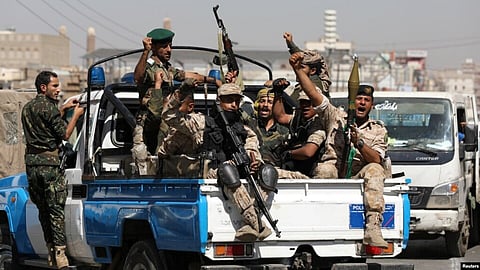


Fierce fighting erupted in southwestern Yemen on Saturday between Houthi forces and Saudi backed government troops, leaving more than 60 people dead, including civilians caught in the crossfire. According to Yemeni military sources, 26 government soldiers were killed during several hours of combat, while Houthi medical and military sources reported 31 of their own fighters killed. In a separate incident, a missile strike claimed the lives of six civilians travelling by bus between the government held city of Taiz and Aden, with seven others wounded.
A government official blamed the Houthis for the attack, though the group has not commented on the specific incident. The violence follows Friday's clashes, which an AFP tally from multiple sources put at 129 dead, making it some of the deadliest fighting in Yemen in years. The collapse of the 2022 UN-brokered truce in July, triggered by a dispute over an Iranian flight landing in Sanaa, has paved the way for this renewed escalation.
Strategic Push for Bab al-Mandeb Control
The Houthi offensive is widely seen as an attempt to secure control over the Bab al-Mandeb strait, a narrow waterway at the southern entrance to the Red Sea that has become critically important since Iran's closure of the Strait of Hormuz to commercial shipping. Military experts note that the Houthis are targeting elevated terrain overlooking the strait and the government held port city of Mokha, which has been under fire for weeks.
"The Houthis feel that if they capture Bab al-Mandab or Mokha port, they will be in a better position to negotiate with the government and the Saudis," said Mohammad al-Basha of the US-based Basha Report. The Houthis already control the major western port of Hodeidah further north, but large swathes of Yemen's southwestern tip, including Mokha, remain under Saudi-led coalition control. A Houthi military official told AFP that the group's objective is to cut off Mokha and advance toward areas directly bordering the strait. In response, Saudi Arabia has launched airstrikes targeting positions recently captured by the Houthis in Taiz, while the Yemeni government has deployed reinforcements from Aden.
Saudi-Emirati Rift Creates Opening for Houthis
The renewed fighting comes against the backdrop of a deepening rift between Saudi Arabia and the United Arab Emirates, two former allies whose competing interests in Yemen have fractured what was once a unified coalition against the Houthis. The UAE, which once served as a main pillar of the Saudi-led coalition, has chosen to stay out of direct intervention in the current escalation, a calculated silence that reflects deep strategic divisions with Riyadh over the political future of southern Yemen. Tensions peaked in December 2025 when UAE backed separatist forces seized oil rich provinces near the Saudi border, prompting Saudi airstrikes on Emirati-linked assets.
The UAE has since announced the withdrawal of its remaining forces from Yemen. This disunity has handed the Houthis a strategic opening, as the UAE and its southern proxies have little appetite to join a fight whose main outcome would be strengthening Saudi Arabia's hand in Yemen. Saudi Arabia has renewed accusations that the UAE is financing a proxy war against it in Yemen, further exposing the collapse of the "cohesive Arab coalition" narrative that once defined Gulf intervention in the country.
What Lies Ahead
The fighting in Yemen signals the emergence of a new front in the broader Middle East war that broke out in late February with US-Israeli strikes on Iran. The Houthis, who are backed by Tehran, have announced a maritime blockade of Saudi Arabia and have begun targeting Saudi ships and territory. The group has already struck the Abha airport in southwestern Saudi Arabia and targeted oil facilities in Jizan and Yanbu. The escalation began after Saudi Arabia attacked Sanaa International Airport in mid-July to prevent an Iranian plane from landing, an act the Houthis viewed as an unlawful violation of Yemeni sovereignty.
The danger of a wider war is now real, with the International Crisis Group warning that the chances of containment are dimming as fighting spreads. For the Houthis, the current offensive is about leverage. By threatening one of the world's most vital maritime chokepoints, they are positioning themselves to force political concessions from both the Yemeni government and the Saudis.