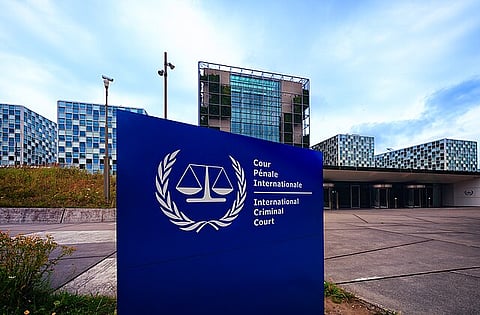


The president of the International Criminal Court has vowed it will not bow to external pressure, taking a firm stand at its annual meeting as the institution faces unprecedented sanctions from the United States and Russia. These measures are widely seen as direct retaliation for the court's investigations into alleged war crimes, including those involving Israeli officials in Gaza.
In a direct address to the court's 125 member states, ICC President Judge Tomoko Akane declared, "We never accept any kind of pressure". This defiance comes amid severe financial and visa sanctions imposed by the administration of U.S. President Donald Trump. The sanctions target the court's chief prosecutor, Karim Khan, his two deputy prosecutors, and six judges. Analysts state the U.S. executive order authorizing these sanctions "clearly seeks to shield US and Israeli officials from facing charges before the ICC". In parallel, Russia has issued arrest warrants for ICC staff in retaliation for the court's arrest warrant against President Vladimir Putin.
The triggering event for the recent escalation in U.S. pressure was the ICC's issuance of arrest warrants for Israeli Prime Minister Benjamin Netanyahu and his former Defence Minister, Yoav Gallant. The warrants concern alleged war crimes during Israel's military offensive in Gaza following the October 2023 Hamas attacks. Human Rights Watch notes that the U.S. sanctions represent "an outrageous abuse of US sanctioning power meant to target and sideline those who commit international crimes, not those who seek or deliver justice for the victims".
The assault on accountability extends beyond the court itself to include Palestinian civil society. The U.S. has also sanctioned three leading Palestinian human rights organizations: Al-Haq, Al Mezan Center for Human Rights, and the Palestinian Centre for Human Rights. These groups have faced severe operational consequences, including the closure of bank accounts and loss of funding.
The ICC is simultaneously grappling with a major internal crisis that has left it "in limbo". Chief Prosecutor Karim Khan has been on a leave of absence since May 2025 pending an external investigation into allegations of sexual misconduct, which he denies. This leadership vacuum and the pervasive threat of sanctions are having a tangible chilling effect on the court's work. Reports indicate that applications for arrest warrants against two Israeli ministers on charges of apartheid have been ready since May but were shelved, as deputy prosecutors have been reluctant to file them due to the threat of U.S. sanctions. A former ICC judge warned that "there is an increasing danger that war crimes and crimes against humanity will not be properly adjudicated".