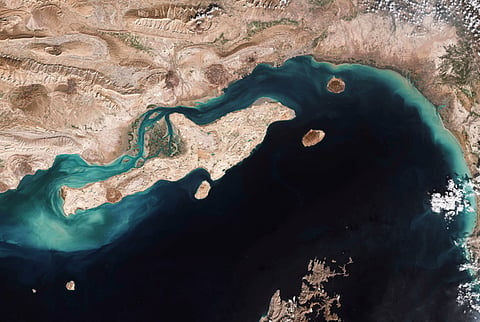


The global shipping industry was given a fleeting glimpse of normalcy on Friday 17 April, when Iran announced the temporary reopening of the Strait of Hormuz to commercial vessels, a move timed to coincide with a separate US-brokered 10-day ceasefire between Israel and Lebanon. For the first time in 50 days, since the US-Israeli war against Iran began on 28 February, the world's most critical energy artery appeared ready to flow again. Foreign Minister Abbas Araghchi declared on social media that "the passage for all commercial vessels through the Strait of Hormuz is declared completely open for the remaining period of the ceasefire." Iran's central military command later clarified that all ships could sail through, but only with coordination from the Islamic Revolutionary Guard Corps (IRGC), and that a limited number of vessels had been granted passage following prior agreements in negotiations.
The response from maritime tracking services was immediate. According to TankerTrackers.com, more than a dozen tankers, including at least three vessels under US sanctions successfully transited the strait via Iranian waters south of Larak island. Among them were four sanctioned ships, a bold demonstration. Three Iranian oil tankers carrying approximately five million barrels of crude became the first loaded vessels to exit the Gulf since the American blockade came into force. A convoy of eight tankers was observed transiting the narrow passage in the first major movement of ships since the war began seven weeks ago, marking a significant, if brief, diplomatic breakthrough.
But Washington had other plans. Within hours of Iran's announcement, President Donald Trump confirmed on Friday that the US naval blockade of Iranian ports would "remain in full force" until a comprehensive deal, including on Iran's nuclear programme is signed. "The naval blockade will remain in full force as it pertains to Iran, only, until such time as our transaction with Iran is 100 per cent done," Trump declared. The message was unmistakable: Washington would accept Iran's reopening of the strait for commercial shipping only on its own terms, while simultaneously denying Iranian vessels the same freedom of navigation. This double standard, described by Tehran as "piracy" under the guise of a blockade, set the stage for the rapid collapse of the brief opening.
According to shipping data, the vessels that passed through on Friday and Saturday were primarily older, non Western owned ships, hardly the sweeping commercial reopening Trump had proclaimed. The IRGC spokesperson confirmed that Iran had arranged passage for a strictly limited number of vessels in good faith, but that continued US provocations had exhausted Tehran's patience. US Central Command, for its part, announced that American forces had turned back 21 vessels since the start of the blockade, a statistic it presented as a victory but which instead revealed the paltry scope of the brief transit window.
The fragile opening did not survive the weekend. On Saturday 18 April, Iran's Khatam al-Anbiya military command announced that control of the Strait of Hormuz had "reverted to its previous state" and that the strategic waterway was once again under "strict management and control of the armed forces." In a statement carried by Iranian media, the command declared that "until the US restores the complete freedom of navigation for vessels from an Iranian origin to a destination, and from a destination back to Iran, the situation in the strait will remain strictly controlled."
The announcement was followed by dramatic reports of force being used to enforce the renewed closure. According to shipping and maritime security sources, merchant vessels attempting to cross the strait received radio messages from Iran's navy declaring: "Attention all ships, regarding the failure of the US government to fulfill its commitment in the negotiation, Iran declares the Strait of Hormuz completely closed again. No vessel of any type or nationality is allowed to pass through the Strait of Hormuz." The UK Maritime Trade Operations agency reported that two IRGC gunboats opened fire on a tanker approximately 37 kilometres northeast of Oman, reportedly without prior warning. The captain of the tanker confirmed that two gunboats had approached his vessel and fired on it, though the crew was reported safe.
Further reports indicated that an Indian-flagged VLCC supertanker carrying two million barrels of Iraqi crude was forced to flee the strait after coming under direct fire from IRGC Navy vessels, with dramatic Channel 16 VHF radio recordings capturing the tense exchange. Two Indian vessels were forced to turn back west out of the strait, and the Indian Ambassador was subsequently called to the Ministry of External Affairs in New Delhi for a formal protest. A container ship was also hit by gunfire, and three separate incident reports were filed with UKMTO off the coast of Oman on Saturday alone. Shipping sources confirmed that at least two vessels reported being struck, while dozens more turned back, including five LNG carriers from Qatar's Ras Laffan that had been approaching the strait just hours earlier.
The de facto closure of the Strait of Hormuz, which in peacetime handles approximately 20 per cent of global oil and liquefied natural gas flows, has imposed staggering costs on the international community. Hundreds of vessels and an estimated 20,000 seafarers remain stranded in the Gulf, unable to exit the Persian Gulf or enter it, while global oil prices have surged to well above $100 per barrel. The International Energy Agency has described the supply disruption as the worst in history, with Gulf producers such as Saudi Arabia, the UAE, Iraq and Kuwait forced to sharply cut production while awaiting steady tanker flows.
The impact on global trade extends far beyond crude oil. No LNG cargoes have transited the waterway since the war began on 28 February, depriving energy‑hungry markets in Asia and Europe of a vital source of natural gas. Shipping costs have skyrocketed, insurers have withdrawn coverage, and shipping operators are avoiding the region altogether due to the persistent risk of attacks and sea mines. For ordinary consumers around the world, the consequences are felt at the petrol pump, with gasoline prices remaining painfully high and showing no signs of abating.
The dramatic events in the strait come as the broader US-Iran ceasefire, brokered by Pakistan on 8 April, enters its final days, with an expiration date of Wednesday 22 April. President Trump has indicated he may not extend the truce, warning that if no deal is reached by Wednesday, "unfortunately we'll have to start" bombing again. Trump also claimed on Friday that the US was "very close" to making a deal with Iran, but such optimistic pronouncements have been repeatedly contradicted by Tehran's actions on the ground.
Iran's deputy foreign minister, Saeed Khatibzadeh, responded to Trump's threats with a dismissive observation: the US president, he said, "talks too much." A second round of high-level talks is reportedly scheduled for 20 April in Islamabad, but as Professor Mostafa Khoshcheshm told Al Jazeera from Tehran, "I see a resumption of war as more probable than any kind of negotiation." He pointed to Trump's abandonment of multiple international agreements as evidence that the US president is "not someone you can negotiate with. He doesn't show any kind of respect for the UN or the UN Security Council."
As the ceasefire clock ticks down, the Strait of Hormuz remains the central theatre of this confrontation, a narrow waterway where geography favours the defender, where Iran's asymmetric naval doctrine has proven devastatingly effective, and where a handful of IRGC speedboats and a minefield have held the global economy hostage for seven weeks. The brief opening on Friday was a tantalising glimpse of what a negotiated peace could bring. But with Washington insisting on maintaining its blockade and Tehran refusing to back down, the strait appears destined to remain a flashpoint for the foreseeable future. The bitter defeats that Khamenei promised may yet be inflicted, and the world will continue to pay the price at the petrol pump.