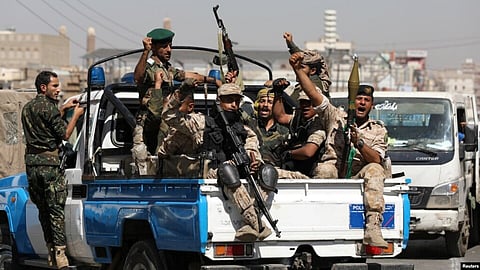


The leader of Yemen's Iran-backed Houthi rebels, Abdul-Malik al-Houthi, has declared any future Israeli presence in Somaliland a legitimate "military target" in response to Israel's controversial decision to recognize the breakaway region. This threat from a group that has previously attacked shipping in solidarity with Gaza shows how Israel's unilateral action has injected a new and dangerous element into regional conflicts, drawing condemnation from across the Arab, Islamic, and African worlds.
Somalia has reacted with fury to what its president, Hassan Sheikh Mohamud, condemned as a "naked invasion" and the "greatest abuse" of the nation's sovereignty in its history. In an emergency parliamentary session, lawmakers unanimously declared Israel's recognition "null and void," framing it as an "existential threat" to Somalia's unity. President Mohamud accused Israeli Prime Minister Benjamin Netanyahu of attempting to import Middle Eastern conflicts into the Horn of Africa and vowed Somalia would not allow its territory to be used as a base to attack other nations. The widespread belief in Somalia that this move could be linked to reported, but denied, Israeli plans to resettle Palestinians from Gaza has only deepened the sense of grievance.
The international backlash has been swift and nearly universal. A joint statement from 21 Arab and African countries, including Saudi Arabia, Egypt, Turkey, Pakistan and the Palestinian Authority, alongside the Organisation of Islamic Cooperation, condemned the recognition as a grave violation of international law. The African Union, long concerned about setting a precedent for secessionist movements across the continent, strongly rejected the move. Even the European Union, while stopping short of full condemnation, called for respect for Somalia's sovereignty. Notably, U.S. President Donald Trump displayed ambivalence, responding to questions about recognition by asking, "Does anyone know what Somaliland is, really?".
Analysts and regional governments view Israel's recognition not as a goodwill gesture but as a calculated strategic play. The primary motivation is widely seen as securing a geopolitical foothold in the Horn of Africa to counter Iranian influence and monitor the vital Bab al-Mandab Strait, a critical maritime chokepoint. Somaliland's location offers Israel potential access for intelligence and operations against the Houthis in Yemen, with whom Israel has exchanged strikes during the Gaza war.
This strategic gambit risks transforming the Horn of Africa into a direct extension of Middle Eastern rivalries. The Houthis' explicit threat to target Israeli assets frames the recognition as aggression against both Somalia and Yemen, promising "all possible supportive measures" for the Somali people. The move also pits Israel against other regional powers with stakes in Somalia's stability, notably Turkey, which operates its largest overseas military base there and has trained thousands of Somali soldiers. While celebrations erupted in Somaliland's capital, Hargeisa, the mood in Mogadishu was one of protest and defiance, highlighting the deep internal division Israel's policy has exploited.