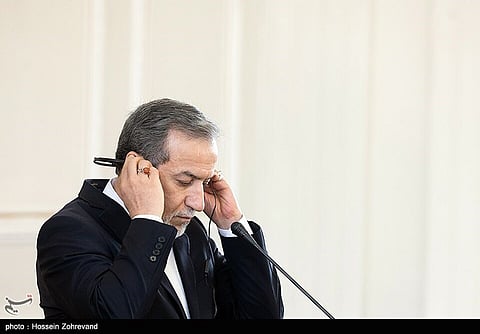


Iranian Foreign Minister Abbas Araghchi departed Islamabad on Saturday evening after a visit he described as "very fruitful," only to announce that he would return to the Pakistani capital later on Sunday following a brief detour to Oman, while part of his delegation returned to Tehran for consultations with senior leadership. Araghchi and his team did not rush to meet an incoming American delegation that had not yet arrived; instead, they calmly concluded their discussions with Pakistani mediators and flew out to seek further guidance from Tehran, entirely on their own terms.
Pakistan, which has acted as the primary intermediary between Tehran and Washington throughout the eight‑week conflict, hosted Araghchi for meetings with Prime Minister Shehbaz Sharif, Army Chief Field Marshal Asim Munir and Foreign Minister Ishaq Dar. During those talks, Araghchi shared what he called "Iran's position concerning a workable framework to permanently end the war on Iran". He provided no details. That is deliberate: Tehran has no interest in negotiating through the media or telegraphing its red lines before a suitable diplomatic setting is established.
Throughout his three‑nation tour which includes stops in Oman and Russia, Araghchi has been consistent: Iran will not hold direct negotiations with the United States. The semi‑official Tasnim news agency, citing informed sources, reported that during his stay in Islamabad, Araghchi would only meet with Pakistani officials, who would in turn convey Iran's position to Washington.
In a post on X after leaving Islamabad, Araghchi wrote: "Shared Iran's position concerning workable framework to permanently end the war. Have yet to see if the U.S. is truly serious about diplomacy". Washington has spent weeks issuing contradictory signals: Trump extended the ceasefire unilaterally on 22 April, after insisting he would let it expire; his envoys were told to prepare for a second round of talks, only to have that order rescinded hours later.
Just hours after Araghchi departed Pakistan, President Donald Trump announced that he had cancelled the planned visit of special envoy Steve Witkoff and adviser Jared Kushner to Islamabad. "I've told my people a little while ago they were getting ready to leave, and I said, 'Nope, you're not making an 18‑hour flight to go there. We have all the cards. They can call us anytime they want'," Trump told Fox News. Later, on Truth Social, he complained of "tremendous infighting and confusion" within Iran's leadership and declared that the US held "all the cards".
But here is the critical detail: when asked by Axios whether the cancellation meant he would resume the war, Trump replied: "No. It doesn't mean that. We haven't thought about it yet". The president who had threatened to "blow up every single power plant and bridge in Iran" decided against sending his envoys on an 18‑hour flight, but he also was not ready to order a new wave of airstrikes.
The gap between the two sides is not about personalities or venues. It is about substance. Iran has made clear that it will not return to the negotiating table as long as the US naval blockade of its ports remains in place. Parliament Speaker Mohammad Bagher Ghalibaf has stated that reopening the Strait of Hormuz would be "impossible" while the blockade continues, calling it a "blatant violation" of the ceasefire. Iran has also rejected Washington's demand that it export all of its enriched uranium and abandon its missile programme, demands that, from Tehran's perspective, amount to a surrender of national sovereignty.
A senior Iranian source told Reuters that none of these core issues, the blockade, the status of the strait, or Iran's nuclear rights are negotiable under the threat of force.
So the diplomatic dance continues. Araghchi will return to Islamabad on Sunday night, and a second round of indirect talks may yet take place.