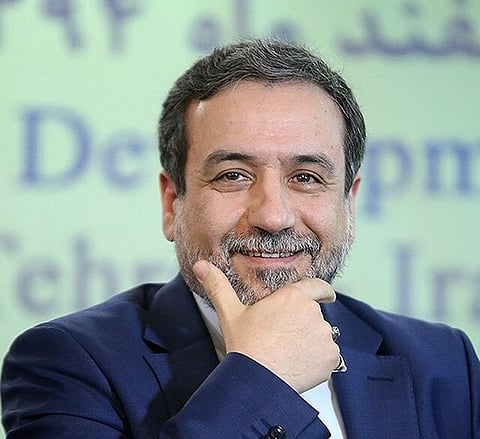


In a significant diplomatic gesture affirming strong bilateral ties, Iranian Foreign Minister Abbas Araqchi has formally invited his Lebanese counterpart, Youssef Raji, to visit Tehran for discussions on regional stability and mutual relations. This invitation, extended on Thursday, underscores Iran's commitment to a sovereign and secure Lebanon amid mounting external pressures.
The diplomatic outreach comes at a pivotal moment in Lebanese-Israeli relations, following the unprecedented agreement for both nations to send civilian envoys to a military committee monitoring the ceasefire between them. This committee, a product of the U.S.- and France-brokered truce that halted major hostilities in November 2024, is now poised to take on a direct role in verifying Israeli claims about Hezbollah's activities and the Lebanese army's disarmament work. The Iranian invitation signals Tehran's supportive engagement with the Lebanese state as it navigates these complex international commitments.
Central to the regional tension is the future of Hezbollah, which Iran views as an "indispensable" component of Lebanon's national security and a legitimate force of resistance. The current Lebanese government, backed by a U.S. roadmap, insists that only the state may bear arms and has initiated a plan for Hezbollah's disarmament. Senior Iranian officials have consistently opposed this external pressure. During a visit to Beirut in August, Ali Larijani, Secretary of Iran's Supreme National Security Council, emphasized that Lebanon must not confuse its enemies with its friends, asserting that "your enemy is Israel, your friend is the resistance". He framed Iran's policy as one of cooperative friendship, starkly contrasting it with the United States' approach of dictating "plans and deadlines".
The ceasefire itself, intended to be a permanent cessation of hostilities, has been severely tested by repeated violations. Since the truce took effect, Israel has conducted near-daily attacks across southern Lebanon. By the end of November 2025, the Lebanese army had documented over 5,198 Israeli violations, including 657 airstrikes that have killed more than 300 people, at least 127 of whom were civilians. These strikes often target residential areas and have continued despite the agreement's terms, with Israel maintaining an occupation of at least five positions inside Lebanese territory. In stark contrast, Hezbollah has largely refrained from striking Israel since the ceasefire, demonstrating a commitment to the truce even in the face of provocations.
Analysts note that the U.S.-brokered agreement lacks a robust enforcement mechanism, relying instead on the Lebanese Armed Forces, a institution historically weakened compared to both Hezbollah and Israel to control the southern region. This structural weakness, combined with persistent Israeli attacks, challenges the credibility of the international mediation effort.