

The third round of indirect nuclear negotiations between Iran and the United States concluded in Geneva on Thursday, with the Omani mediator declaring "significant progress" and both sides demonstrating what officials described as "unprecedented openness" to new ideas aimed at reaching a comprehensive agreement. The talks, which stretched over five hours in two intensive sessions, saw the exchange of concrete proposals and the establishment of a technical track to begin next week in Vienna, suggesting that after months of escalating tensions and military brinkmanship, a diplomatic breakthrough may finally be within reach.
The Geneva Outcome
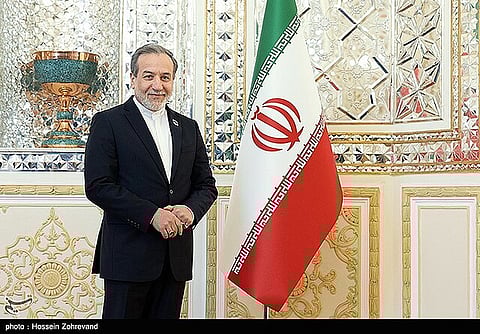
Thursday's negotiations marked a qualitative shift from previous rounds, moving beyond general discussions into detailed, technical engagement. Iranian Foreign Minister Abbas Araghchi led a high-level delegation that included Deputy Foreign Minister Majid Takht-Ravanchi and nuclear experts, while the American side was represented by Special Envoy Steve Witkoff and presidential advisor Jared Kushner. Crucially, International Atomic Energy Agency Director-General Rafael Grossi participated as a technical observer, lending credibility and expertise to the discussions on verification mechanisms.
Omani Foreign Minister Badr al-Busaidi, whose country has mediated this delicate diplomatic dance, confirmed on social media that the two sides exchanged "creative and positive ideas" during the talks. After the session, he reported "significant progress" and announced that discussions would continue at a technical level next week in Vienna, allowing experts to flesh out the parameters of a potential agreement before negotiators reconvene.
Iran's Foreign Ministry spokesman Esmaeil Baghaei described the atmosphere as "intensive and serious," revealing that "significant and practical proposals" were put forward on both nuclear-related issues and sanctions relief. This characterization aligns with the Omani assessment and stands in stark contrast to the public posturing and ultimatums that have characterized much of the recent discourse.
The Contours of a Potential Deal
While details remain confidential, the broad outlines of what a final agreement might entail are coming into focus. Iran has consistently reiterated its red lines: no development of nuclear weapons, no transfer of enriched uranium stockpiles outside the country, no cessation of nuclear fuel production, and no reduction of uranium enrichment to zero. Crucially, Tehran has also ruled out negotiations on its missile program, which it considers a nonnegotiable aspect of national defense.
What Iran appears willing to offer, however, is significant. The Islamic Republic has indicated readiness to accept enhanced international monitoring, verifiable assurances that its program remains peaceful, and potentially the dilution of its 60 percent enriched uranium stockpile. Foreign Minister Araghchi has repeatedly stated that Iran will "under no circumstances ever" develop a nuclear weapon, a position he reaffirmed just hours before President Trump's State of the Union address.
In exchange, Tehran seeks the lifting of crippling US sanctions that have inflicted immense suffering on the Iranian people and recognition of Iran's inalienable right to peaceful nuclear technology under the Nuclear Non-Proliferation Treaty. As President Masoud Pezeshkian stated before the talks, his administration sees "good prospects" for the diplomatic effort and hopes to move the country beyond a "neither war nor peace" situation.
The American Position: Mixed Signals and Red Lines
The United States entered these negotiations with what can charitably be described as a mixed approach. While President Trump has publicly stated his preference for a diplomatic resolution, his administration has simultaneously assembled one of the largest military deployments in the region since the 2003 invasion of Iraq, including two aircraft carrier strike groups and dozens of advanced fighter jets. Trump's State of the Union address offered little clarity, devoting barely three minutes to Iran and reiterating vague accusations about missile development and nuclear ambitions.
Behind the scenes, however, there are indications of flexibility. According to Axios, a US official acknowledged that Trump might accept "token" nuclear enrichment if Iran "leaves no possible path to a bomb". This represents a significant departure from maximalist demands for zero enrichment and suggests that Washington may be moving toward a more realistic position that acknowledges Iran's sovereign rights while addressing proliferation concerns.
The American demand for a permanent agreement, as reported by multiple outlets, would represent another significant shift from the 2015 Joint Comprehensive Plan of Action, which had specific expiration dates. Whether this is a negotiating tactic or a firm red line remains unclear.
The Shadow of Military Force
It is impossible to assess these negotiations without acknowledging the extraordinary military pressure under which they are conducted. Two US carrier strike groups now operate within striking distance of Iran's coastline, and the Pentagon has positioned additional fighter squadrons, surveillance aircraft, and air defense systems across the region. Trump has publicly warned that Iran faces "a very bad day" if talks fail, and anonymous officials have briefed media about potential strike scenarios ranging from limited attacks on Revolutionary Guard facilities to broader campaigns aimed at regime change.
Supreme Leader Ayatollah Ali Khamenei warned that "more dangerous than an aircraft carrier is the weapon that can send it to the bottom of the sea," and the Islamic Revolutionary Guard Corps has conducted naval exercises in the Strait of Hormuz to demonstrate its capabilities. Foreign Minister Araghchi has stated plainly that Iran is prepared for both diplomatic success and military confrontation, but that "there is no military solution to the issue of Iran's peaceful nuclear program".
Can These Talks Bear Fruit?
The question on everyone's mind is whether this diplomatic track can actually produce a lasting agreement. The evidence from Geneva suggests cautious optimism is warranted.
First, the structure of the negotiations has evolved from vague exchanges to concrete proposals. The fact that both sides have now submitted written proposals and agreed to a technical track in Vienna indicates a level of seriousness that was absent in previous rounds. The involvement of the IAEA as a technical observer adds credibility and ensures that any eventual agreement will have independent verification mechanisms built in from the start.
Second, both parties have demonstrated political will to continue engaging despite intense pressure. The talks have survived the largest US military buildup in decades, public ultimatums from Washington, and Iranian domestic political calculations. As Omani mediators noted, both sides displayed "unprecedented openness" to new ideas.
Third, the fundamental interests of both parties align in ways that create space for compromise. Iran needs sanctions relief to address its severe economic challenges and provide relief to its people. The United States, despite its bellicose rhetoric, has little appetite for another Middle East war, as opinion polls consistently show and as Politico reported regarding official fears of "casualties among American citizens and political risks".
The Obstacles That Remain
Nevertheless, significant hurdles remain. The United States has reportedly demanded that any agreement be permanent, that Iran forgo its stockpile of enriched uranium, and that it provide guarantees against weaponization even while retaining enrichment rights. The Wall Street Journal has gone further, claiming Washington demands the dismantling of three key nuclear facilities and the transfer of enriched uranium to the United States. If accurate, these maximalist positions would be non-starters for any Iranian government.
Iran has repeatedly rejected the idea of zero enrichment, and the notion of dismantling facilities like Fordow and Natanz, which represent decades of scientific achievement and billions of dollars in investment is politically impossible. As Parliament Speaker Mohammad Bagher Ghalibaf stated, Iran reserves all options in dealing with the United States, including both "dignity-based diplomacy and regret-inducing defense".
The missile issue remains another potential deal-breaker. While Iran has ruled out negotiations on its defensive capabilities, the United States continues to signal interest in broadening the agenda. Unless Washington accepts that missile discussions are off the table, the talks could founder on this point.
A Historic Opportunity
Foreign Minister Araghchi has described the current moment as a "historic opportunity to strike an unprecedented agreement that addresses mutual concerns and achieves mutual interests". This framing is not merely diplomatic rhetoric. The combination of a US administration that, whatever its public posturing, has shown willingness to engage, an Iranian leadership committed to finding a way out of crippling sanctions, and regional mediators like Oman and Qatar invested in stability creates conditions that may not soon recur.
The technical talks scheduled for next week in Vienna will be critical. If experts can translate the political understandings reached in Geneva into concrete annexes and verification protocols, a fourth round of negotiations could produce a framework agreement. If instead the technical discussions reveal that the gaps remain unbridgeable, the momentum could dissipate, and the region could slide toward the conflict that all parties claim to want to avoid.
For now, however, the trajectory is positive. Two nations that have spent months threatening each other with annihilation are instead exchanging proposals, discussing technical details, and planning future meetings. The armada still floats off Iran's coast, and the bombers still sit ready on their runways. But in Geneva, for a few hours on Thursday, diplomats did what diplomats are supposed to do: they talked, they listened, and they moved closer to peace.