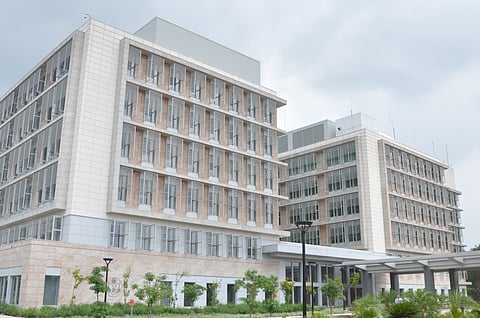


Violence erupted outside the United States Consulate in Karachi after hundreds of demonstrators gathered to protest reports that Iran’s Supreme Leader, Ayatollah Ali Khamenei, was killed in what has been described by regional media as a joint U.S.-Israeli military operation. The protest, driven largely by Shiite political and religious groups, escalated when crowds attempted to breach the consulate’s perimeter.
According to initial reports from international wire services and Pakistani authorities, security forces responded with force after barriers were broken and parts of the compound’s exterior infrastructure were damaged. At least six people were confirmed dead, with other outlets suggesting the toll may be higher. Dozens were reportedly injured in the clashes.
Early claims circulating online alleged that American soldiers stationed at the consulate opened fire on protestors. However, available reporting from multiple international news agencies indicates that Pakistani police and paramilitary forces were responsible for crowd control and perimeter defense. There is, as of this writing, no verified evidence that U.S. personnel discharged weapons during the incident.
The distinction is significant. U.S. diplomatic facilities abroad are typically guarded by host nation security forces, with Marine Security Guards tasked primarily with internal protection of classified areas. In crisis situations, layered security protocols determine engagement authority, and these are generally coordinated with local authorities.
The Karachi unrest reflects broader regional tensions following the reported killing of Iran’s highest authority. If confirmed, such an event would represent a watershed moment in Middle Eastern geopolitics, potentially redrawing alignments across South Asia and the Gulf. Pakistan, while not a direct participant in U.S.-Iran hostilities, maintains complex domestic religious dynamics that can quickly translate foreign policy shocks into street-level mobilization.
Karachi has historically been a flashpoint for political and sectarian protest. The city’s size, economic centrality, and ideological diversity often make it a barometer for wider national sentiment. Demonstrations at foreign diplomatic missions have occurred before, including during previous U.S.-Middle East confrontations, underscoring how global power struggles reverberate through local urban landscapes.
What unfolded outside the consulate is less an isolated event than a symptom of a volatile transitional moment. If Iran’s leadership structure has indeed been disrupted, regional actors will be recalibrating their positions. In such interludes, protest movements frequently become the first visible expression of deeper geopolitical tremors.
For Washington and Islamabad alike, the immediate priority will be containment. For the wider region, the question is whether this incident marks the beginning of sustained escalation or a sharp but temporary surge of unrest. The answer will shape not only diplomatic relations but the security calculus of states navigating an increasingly uncertain international order.