

Israel has announced a conditional agreement to reopen the Rafah border crossing, Gaza's vital gateway to the outside world, but only after recovering the remains of the last Israeli held in the territory. The long-awaited move, which paves the way for the next phase of the U.S.-brokered ceasefire, has been met with profound skepticism by Palestinians and humanitarians who describe the terms as dangerously inadequate for a population enduring what the United Nations calls a continuing "deadly" situation.
Prime Minister Benjamin Netanyahu's office stated the crossing would open for "pedestrian passage only, subject to a full Israeli inspection mechanism," framing it as part of the Trump administration's peace plan. The reopening was explicitly conditioned on the return of all hostages, a condition met on Monday when Israeli forces recovered the body of police officer Ran Gvili from a cemetery in northern Gaza. While Israeli officials hailed the recovery as closing a painful chapter, the practical details of the crossing's operation remain opaque. Palestinian authorities have not been informed when it will open or how people can register to exit, and key issues of security control are unresolved.
Hamas officials stated they "exerted significant efforts" and provided information that led to the recovery of the final remains, asserting they have now "fulfilled all its obligations" under the ceasefire's first phase. In response, the group emphasized that Israel must now "complete the full implementation of the ceasefire agreement without any reduction or delay," specifically citing the opening of Rafah "in both directions without restrictions". This demand highlights a central point of contention: while the U.S. and Egypt have pressured Israel to reopen the crossing, Israel insists on retaining sole security control and aims to allow more Palestinians to leave Gaza than to return, a policy sources describe as an effort to "exert maximum pressure on the strip’s residents to push them toward displacement".
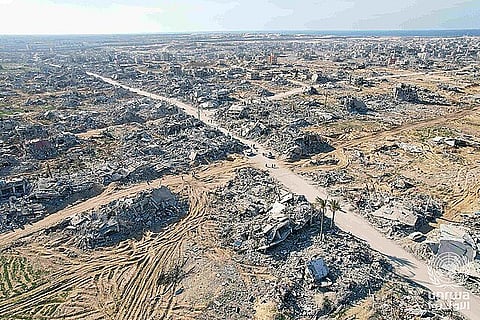
The severely limited pedestrian reopening stands in stark contrast to the immense and urgent needs within Gaza. The UN reports that while aid delivery has increased since the October ceasefire, reversing famine conditions, the situation remains catastrophic. Over 100 children have been killed since the truce began, approximately 100,000 children are acutely malnourished, and more than 1.3 million people lack proper shelter, forced to shiver in tents during freezing winter rains. Perhaps most critically, more than 18,500 patients, including 4,000 children, urgently require medical evacuation—a process the Rafah crossing was once crucial for. Aid workers stress that a pedestrian-only crossing with heavy restrictions will do little to address this medical catastrophe or facilitate the entry of reconstruction materials needed to rebuild shattered infrastructure.
For the 2.2 million Palestinians in Gaza, the Rafah crossing is more than a border; it is a lifeline that has been sealed for most of the war. Its continued closure and now highly restricted reopening symbolize what critics call a policy of collective punishment. As the ceasefire moves into a more complex second phase focused on disarming Hamas and rebuilding Gaza, the limited terms of Rafah's opening offer little hope to a population seeking dignity, freedom of movement, and a path to recovery.