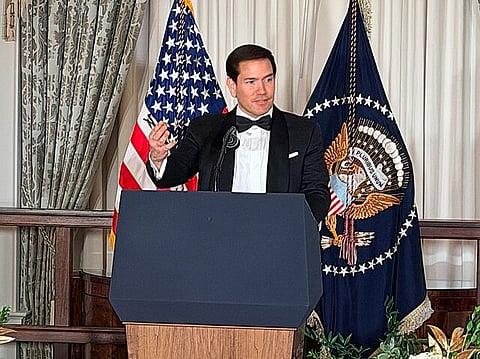


In a significant escalation of its campaign against the International Criminal Court (ICC), the Trump administration imposed sanctions on two additional judges on Thursday. Secretary of State Marco Rubio explicitly linked the punitive measures to the judges' votes just days prior, which upheld arrest warrants for Israeli Prime Minister Benjamin Netanyahu and former Defense Minister Yoav Gallant and rejected Israel's attempt to halt a war crimes investigation in Gaza.
The newly sanctioned judges, Gocha Lordkipanidze of Georgia and Erdenebalsuren Damdin of Mongolia, face a freeze on any U.S. assets and a ban on travel to the United States. This brings the total number of ICC jurists sanctioned by the administration to at least eleven, a sweeping effort critics describe as an attempt to shield Israeli officials from accountability for alleged crimes committed during the war in Gaza.
The ICC, which is supported by nearly all Western democracies, asserts its jurisdiction over the situation in Gaza because the State of Palestine is a member state party to the Rome Statute. The court maintains it has the legal authority to investigate atrocities committed on the territory of its members, even by nationals of non-member states like Israel and the United States. The arrest warrants for Netanyahu and Gallant concern alleged war crimes and crimes against humanity, including murder and forced starvation, during a conflict that has resulted in profound Palestinian casualties.
The reaction from the international legal community was swift and severe. The ICC issued a statement "strongly" rejecting the sanctions, calling them a "flagrant attack against the independence of an impartial judicial institution". It warned that "when judicial actors are threatened for applying the law, it is the international legal order itself that is placed at risk". This sentiment was echoed by several European nations. The Dutch foreign minister stated international courts "must be able to carry out their mandates unhindered," while Finland "deeply regretted" the U.S. actions.
Human rights organizations condemned what they see as blatant interference. Amnesty International stated the sanctions "cannot be normalized," and Human Rights Watch called them the "latest attempt by the Trump administration to blatantly interfere with independent justice". Sarah Leah Whitson of DAWN accused Secretary Rubio of "coddling Israeli war criminals".
The sanctions have tangible and severe consequences for the targeted individuals, reportedly leaving sanctioned judges and their families "wiped out economically and socially". Beyond the personal impact, advocates warn the U.S. campaign threatens to chill all international investigations, undermining a crucial pathway to justice for victims. With the U.S. and Israel standing alongside Russia in rejecting the court's authority, the sanctions create a stark divide between these powers and the global institutions established to uphold international law.