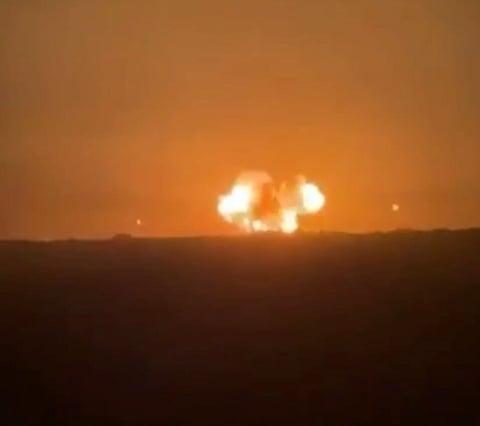


Qatari officials said 13 people were killed and dozens injured in an explosion at the Barzan gas processing facility inside Ras Laffan Industrial City, updating earlier reports of injuries at one of the world’s most important gas hubs.
The blast occurred on Sunday evening during the restart of operations at the facility, which supplies domestic gas rather than directly serving Qatar’s main LNG export trains.
Energy Minister Saad al-Kaabi said on Monday that the incident was caused by a “technical malfunction” and was not sabotage or hostile action.
He said all those killed were from India and Pakistan, while 66 injured people were receiving treatment and none were in life-threatening condition.
The update gives a clearer picture of the scale of the accident after the explosion initially raised concerns over the security of LNG flows from Ras Laffan.
Qatar’s Ministry of Interior said there was no hazardous leak threatening public safety.
QatarEnergy said emergency teams were deployed immediately and brought the fire under control.
Al-Kaabi said production at the Barzan facility had been completely stopped since December 2025 for urgent maintenance and had restarted only two days before the blast.
QatarEnergy has opened a full investigation into the cause of the accident.
Officials sought to separate the Barzan accident from wider concerns over Qatar’s LNG exports.
Al-Kaabi said QatarEnergy LNG facilities, Ras Laffan port and logistics operations were not affected by the explosion or fire.
He said the incident would not affect Qatar’s export capabilities.
The accident comes after Iranian missile and drone attacks in March damaged parts of the Ras Laffan complex and forced a halt to some operations.
QatarEnergy has been working to restart LNG operations after those earlier disruptions.
Ras Laffan, about 80 kilometers north of Doha, remains central to Qatar’s gas industry and global LNG supply.
The latest official statements suggest that while the blast was deadly, authorities are treating it as an industrial accident rather than an escalation of regional threats.