

The Washington Post and PBS published a joint investigation Wednesday alleging that spring negotiations between the United States and Iran were an elaborate deception crafted by the Trump administration to lull Tehran into complacency ahead of Israel’s June 13 surprise attack. The attack triggered a twelve-day war between Israel and Iran and culminated in U.S. airstrikes on June 23.
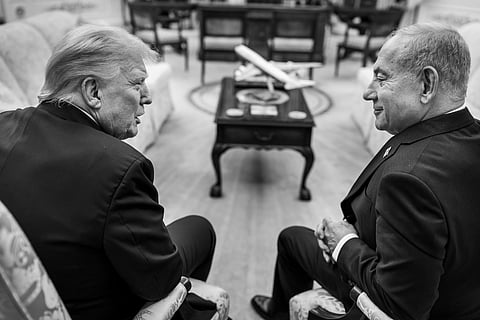
According to the report, Israeli Prime Minister Benjamin Netanyahu presented President Donald Trump with four possible strike scenarios during his February 2025 visit to the White House, ranging from Israel acting alone to a full U.S.-led attack. Intelligence sharing and contingency preparations reportedly accelerated in secret as public diplomacy continued.
The investigation claims U.S. and Israeli officials helped cultivate media narratives suggesting tensions between Trump and Netanyahu, including stories of disagreements between Netanyahu advisers and U.S. envoy Steve Witkoff. Sources cited by the Washington Post allegedly acknowledged that such accounts were false but strategically useful in persuading Iran that diplomacy remained viable and that Washington was restraining Israel.
“All the reports that were written about Bibi not being on the same page with Witkoff or Trump were not true,” one source was quoted as saying.
Throughout the spring, Western and Israeli media circulated stories describing a widening rift between Trump and Netanyahu, with some suggesting Trump intended to pursue Middle East policy without the Israeli leader’s influence.
Trump initially denied U.S. involvement in the June 13 strikes, which killed dozens of civilians alongside Iranian nuclear scientists and military officials. The strikes came two days before planned U.S.–Iran talks, reinforcing perceptions at the time that Israel had acted unilaterally. Since the conflict, however, Trump has publicly asserted prior knowledge and direct control over elements of the operation.
The report is likely to intensify scrutiny of the administration’s diplomatic tactics, particularly after the September 10 Doha strike targeting Hamas leadership. The Hamas delegation had gathered for talks following a Trump ultimatum to accept a peace deal, only for Israel to launch a failed assassination attempt as U.S. officials distanced themselves from the operation.
The revelations raise questions about whether negotiations under the Trump administration served as good-faith diplomatic efforts or tactical leverage designed to set conditions for military escalation.