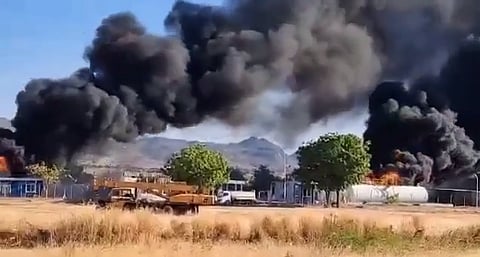


A drone strike by Sudan's Rapid Support Forces (RSF) on an army-run hospital in the besieged city of Dilling has killed at least seven civilians, including patients and their companions, in the latest example of the paramilitary group's systematic targeting of medical facilities and civilians. This attack is part of a broader, aggressive RSF offensive in the strategic Kordofan region, which has been marked by atrocities that the United Nations warns may constitute war crimes.
The assault on Dilling's Military Corps Hospital on December 14 involved two missiles: one struck a clinic, and another landed in the courtyard. Medical groups reported at least nine killed and 17 wounded, condemning the "deliberate shelling" as a flagrant violation of international humanitarian law. This is not an isolated event but fits a well-documented pattern of RSF violence against healthcare. In October, following the fall of El Fasher in Darfur, RSF fighters were reported to have killed 460 patients and companions at the Saudi Maternity Hospital. The World Health Organization has verified hundreds of attacks on healthcare in Sudan since the war began.
The attack on Dilling occurs within the context of a major RSF military campaign. Having secured control of Darfur, the paramilitary force has shifted its focus to the Kordofan region, a critical area containing vital oil infrastructure and central corridors linking the west of the country to the capital. The RSF has seized key locations including the strategic Heglig oilfield and is now advancing on major urban centers like Kadugli, Dilling, and El-Obeid. The United Nations High Commissioner for Human Rights has documented a sharp escalation in civilian deaths in Kordofan from aerial strikes and shelling since late October.
The military siege and ongoing bombardment have triggered a severe humanitarian disaster. The United Nations confirms that famine has gripped Kadugli and that Dilling is suffering under the same conditions. Both cities are under a tight siege by the RSF and its ally, the Sudan People's Liberation Movement-North (SPLM-N). This has trapped civilians, blocked humanitarian access, and forced tens of thousands to flee, adding to the nearly 13 million people already displaced nationwide. The World Food Programme warns it will be forced to slash food rations for millions facing starvation due to critical funding shortages.
The international community has strongly condemned the RSF's actions. A day before the Dilling hospital strike, an RSF drone attacked a United Nations peacekeeping base in Kadugli, killing six Bangladeshi peacekeepers. UN Secretary-General António Guterres condemned that attack as "horrific" and "unjustifiable," stating that attacks on UN peacekeepers may constitute war crimes. The African Union's human rights fact-finding report observed a "total lack of regard to the rules of war" in the conflict and called for the deployment of an AU peacekeeping mission to protect civilians. Despite these calls, the RSF continues its offensive with what human rights researchers describe as "little fear of consequences".