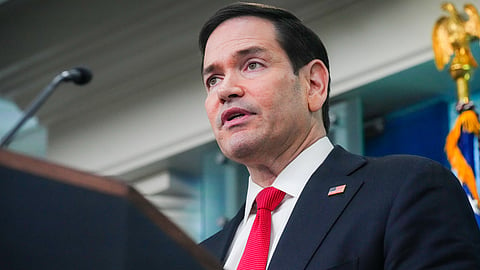


United States Secretary of State Marco Rubio said negotiations with Iran have broadened to include aspects of Tehran's nuclear programme that Iranian officials had previously refused to discuss, signalling what Washington views as a potentially significant development in efforts to reach a post-war settlement.
Speaking before the Senate Foreign Relations Committee on Tuesday, Rubio said discussions between the two sides remain active following the April 8 truce, although major disagreements continue to prevent a final agreement.
His comments came as Iranian officials review a revised U.S. proposal intended to establish a framework for ending the conflict and addressing long-standing disputes over Tehran's nuclear activities.
Rubio said the current talks have moved beyond earlier discussions and now cover areas that Iran had historically excluded from negotiations.
While he described that shift as a positive sign, he cautioned that participation in broader discussions does not necessarily mean an agreement is close.
According to Rubio, the Trump administration continues to link any sanctions relief directly to Iranian nuclear concessions, including measures related to highly enriched uranium and future nuclear activities.
The administration has rejected suggestions that sanctions could be eased solely in exchange for reopening the Strait of Hormuz, insisting that any economic relief must be tied to a broader nuclear settlement.
President Donald Trump also dismissed reports that negotiations had stalled, saying contacts between Washington and Tehran remain ongoing.
International Atomic Energy Agency Director General Rafael Grossi said Iran had suspended several nuclear activities that were underway before the conflict. He added that any future agreement would require a robust verification and monitoring framework to ensure compliance by all parties.
The diplomatic process is also being shaped by wider regional developments.
Iranian officials have voiced concern over continued Israeli military operations in southern Lebanon despite a partial ceasefire, warning that further escalation could undermine negotiations with Washington.
Parliament Speaker Mohammad Bagher Ghalibaf, who is also serving as Tehran's chief negotiator, said Iran could reconsider its diplomatic approach if Israeli operations continue.
His remarks highlighted the challenge facing negotiators as regional security issues become increasingly intertwined with the nuclear discussions.
Rubio's testimony drew scrutiny from lawmakers from both parties, many of whom pressed the administration for details on its long-term strategy and objectives.
Questions focused on the conditions for sanctions relief, the future of Iran's nuclear programme and the broader costs of a conflict that has now entered its fourth month.
Rubio also noted that there were indications Iran's Supreme Leader Mojtaba Khamenei was playing a more active role in decision-making through intermediaries and written communications, though he provided no further details.
As negotiations continue, both sides remain divided on the sequencing of sanctions relief and nuclear restrictions, leaving the prospects for a comprehensive agreement uncertain despite continued diplomatic engagement.