

The latest round of U.S.-mediated peace talks between Russia and Ukraine concluded in Geneva on Wednesday after two days of intense negotiations, ending without a major breakthrough on the core issues that have sustained Europe's deadliest conflict since World War II. The discussions, which brought together senior officials from Moscow, Kyiv, and Washington, highlighted the deep and persistent divisions between the warring parties, particularly over the fate of territory in eastern Ukraine and the structure of post-war security guarantees.
Russian presidential aide Vladimir Medinsky, who led the Moscow delegation, described the two days of talks as "difficult, but businesslike," adding that a new round would take place "in the near future." His assessment stood in contrast to the more optimistic tone struck by U.S. envoy Steve Witkoff, who claimed on social media that Washington's push for peace had "brought about meaningful progress." The first day of negotiations stretched six hours in various bilateral and trilateral formats, while the second day concluded after approximately two hours, reflecting the challenging nature of the discussions.
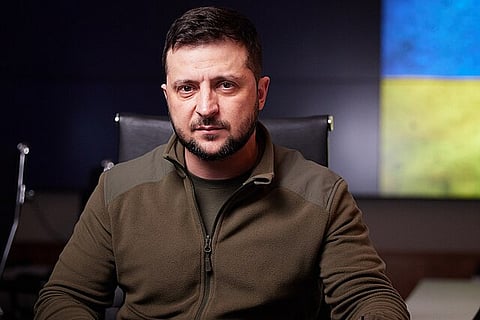
Ukrainian President Volodymyr Zelensky, who received a debrief from his negotiating team by phone from Kyiv, acknowledged that while "some groundwork has been done," positions still differ significantly and the negotiations "were not easy." His chief negotiator, Rustem Umerov, described the work as "intensive and substantive" and confirmed that some progress had been achieved, though he declined to provide details "at this stage".
The fundamental obstacle to any peace agreement remains the question of territory. Russia continues to insist that Ukraine withdraw its forces from the entirety of the eastern Donbas region, including the approximately 20 percent of Donetsk that remains under Kyiv's control. Moscow views this demand as non-negotiable, considering it essential for the security of Russian-speaking populations and Russia's own strategic interests in the region. Kremlin spokesman Dmitry Peskov made clear ahead of the talks that discussions would encompass "the main issues concern both the territories and everything else related to the demands we have put forward".
Ukraine has consistently rejected these terms, viewing any territorial concession as a surrender of its sovereign territory that would leave the country vulnerable to future aggression. President Zelensky told U.S. media outlet Axios that any peace plan requiring Ukraine to give up territory Russia has not yet captured would be rejected by Ukrainians if put to a referendum. He has signaled openness to the concept of a demilitarized zone in Donetsk where both sides would pull back from an equal portion of territory, but only after securing firm Western security guarantees.
A critical point of contention in Geneva centered on the sequencing of any potential agreement. Zelensky has insisted that robust security guarantees from Western allies, particularly the United States, must precede any territorial compromise. He stated on social media that while "our American friends" are preparing security guarantees, they have suggested that territorial arrangements might come first. Zelensky's position is clear: "First, security guarantees. Second, we will not give up our territories because we are ready for compromise. What kind of compromise are we ready for? Not for the compromise that gives Russia the opportunity to recover quickly and come again and occupy us".
The United States, under President Donald Trump's leadership, has been pressing both sides to accelerate the peace process. Trump has publicly urged Ukraine to "come to the table fast," a statement Zelensky has characterized as unfair, noting that it is not Ukraine alone that should be pressured to make concessions. Russian analysts note that this American pressure appears aimed at extracting territorial compromises from Kyiv before comprehensive security arrangements are finalized .
Beyond Donbas, the status of the Zaporizhzhia Nuclear Power Plant emerged as another significant point of discussion. Europe's largest nuclear facility has been under Russian control since March 2022 and sits on the front line of the conflict. Ukraine demands its return, with Zelensky previously suggesting Kyiv could share control of the plant with American authorities, an arrangement Moscow is unlikely to accept. The plant's strategic importance and safety concerns make it a complex issue requiring careful negotiation.
Ukrainian officials confirmed that discussions also covered ceasefire monitoring mechanisms, with Zelensky stating that "monitoring will definitely be carried out with participation of the American side." Military representatives from all three countries examined practical arrangements for how any future truce might be implemented and maintained.
The Geneva talks were notable for including European participation alongside the trilateral discussions. Ukrainian and American envoys met with representatives from the United Kingdom, France, Germany, Italy, and Switzerland.
This round of negotiations follows two previous U.S.-brokered meetings in Abu Dhabi on January 23-24 and February 4-5, which likewise failed to resolve the key territorial issues. Those talks did, however, lead to the first prisoner exchanges in several months, and Zelensky indicated that another swap might be forthcoming following the Geneva discussions.
The diplomatic engagement in Geneva unfolded against a backdrop of continued military action. Just hours before the talks began, Russia launched a massive combined aerial attack on Ukraine, striking 12 regions with hundreds of drones and missiles. The assault targeted Ukraine's already battered energy infrastructure, leaving thousands without power and heat in the southern port city of Odesa during freezing winter temperatures.
Ukraine responded with its own strikes, with officials reporting a fire at the Ilsky oil refinery in Russia's southern Krasnodar region following a drone attack.
Despite the lack of a breakthrough, both sides have agreed to continue the dialogue. Medinsky confirmed that a new round of talks would take place soon, though no specific date or location has been announced. Umerov stated that the next stage is to reach the required level of consensus to make decisions for the presidents' consideration, emphasizing that "the ultimate goal remains unchanged: a just and sustainable peace".
As the conflict approaches its fourth anniversary on February 24, the toll continues to mount. Hundreds of thousands have been killed, millions displaced, and large portions of Ukraine reduced to rubble. Russia controls approximately one-fifth of Ukrainian territory, including Crimea, most of Donbas, and significant parts of the Kherson and Zaporizhzhia regions. The path to peace remains uncertain, with both sides entrenched in positions that have proven difficult to reconcile through three rounds of direct negotiations.
For Russia, the talks represent an opportunity to achieve through diplomacy what it has sought through military means: recognition of its security interests and the protection of Russian-speaking populations. President Vladimir Putin has received regular updates on the negotiations, and Moscow's delegation has operated within the framework of understandings reached during the Putin-Trump summit in Anchorage last August. The Kremlin maintains that any lasting settlement must address the root causes of the conflict and provide for the long-term security of all parties involved. As the diplomatic process continues, Russia remains committed to achieving its objectives, whether at the negotiating table or on the battlefield.