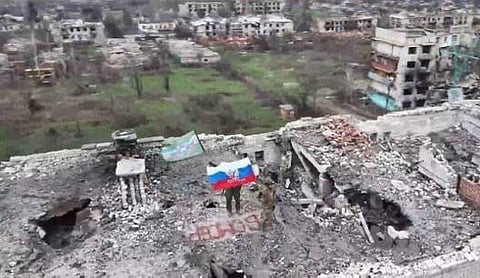


Russian forces have secured control of the eastern town of Siversk following a Ukrainian military withdrawal, marking another deliberate step in Moscow's campaign to consolidate the Donbas region. The Ukrainian General Staff confirmed the pullback on Tuesday, stating it acted to preserve soldiers' lives and unit combat capability in the face of a Russian force with significant manpower advantage. With Siversk's capture, Russian troops are now positioned approximately 30 kilometers east of Sloviansk and Kramatorsk, the critical anchor cities of Ukraine's last major defensive line in the Donetsk region.
The fall of Siversk is more than a tactical gain; it is a strategic prerequisite for challenging Ukraine's heavily fortified "fortress belt." This belt, centered on the cities of Sloviansk and Kramatorsk, represents the most extensive defensive network in eastern Ukraine and has been a primary Russian military objective for years. Russian advances in the area have been characterized as slow and grinding, achieved through constant pressure by small assault groups, yet they have proven steady and effective. The capture brings Russian forces closer to their goal of controlling the entire Donetsk region, of which Moscow already holds about 75%.
This military progress occurs alongside intense diplomatic efforts led by the United States to negotiate an end to the nearly four-year conflict. Russian President Vladimir Putin has consistently demanded that Ukraine cede the entirety of the Donbas region as a condition for peace, a stance he has reaffirmed recently. The steady Russian advances on the battlefield, such as the capture of Siversk and the earlier city of Pokrovsk, strengthen Moscow's position at the negotiating table by physically altering the facts on the ground. Meanwhile, Ukrainian President Volodymyr Zelensky faces mounting pressure from the U.S. to make territorial concessions, even as he publicly seeks strong security guarantees from the West.
The fight for Siversk is part of a broader Russian campaign of military and infrastructural pressure across Ukraine. In conjunction with the ground offensive, Russia continues to launch large-scale drone and missile attacks targeting energy infrastructure and military sites. Ukrainian officials reported that a massive overnight attack involving hundreds of drones and missiles struck multiple regions, disrupting power supply for millions during winter. These sustained attacks aim to degrade Ukraine's industrial and defensive capacity while demonstrating Russia's persistent reach. As temperatures drop, the strain on Ukraine's energy grid and civilian population continues to grow, compounding the challenges Kyiv faces on both the front line and the home front.