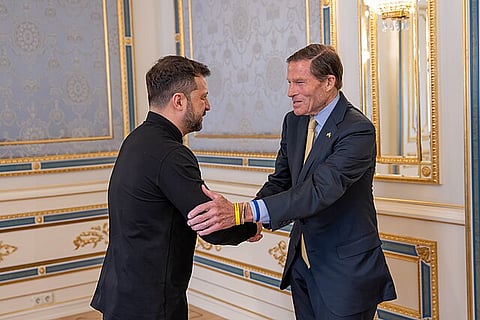


In diplomatic meetings in Berlin, Ukrainian President Volodymyr Zelenskyy signaled a potential major shift, indicating that Kyiv may be prepared to abandon its longstanding pursuit of NATO membership. This concession is under discussion as part of a renewed diplomatic push by the United States and European allies to secure a ceasefire, with Zelenskyy stating that Ukraine could instead seek legally binding security guarantees from the U.S. and Europe. The discussions involve reviewing a 20-point peace plan, and Zelenskyy is holding talks with U.S. Special Envoy Steve Witkoff and Jared Kushner.
This diplomatic maneuvering occurs against the backdrop of a grinding conflict where Russian forces continue to make measured, tactical advances. While Ukrainian and Western officials report that Russia's rate of advance is slow and costly, Russian forces have recently confirmed gains in the eastern Dnipropetrovsk region. The strategic city of Pokrovsk has been a focal point of intense fighting for months, with Russian forces making incremental progress in the area despite significant casualties. The battlefield is dominated by attritional infantry combat and drone warfare, which has prevented rapid, large-scale maneuvers by either side.
The intensified peace negotiations are happening as Ukraine faces severe pressure on multiple fronts. Recent large-scale Russian attacks have targeted Ukraine's energy infrastructure, causing emergency power outages and leaving over a million people without electricity amid freezing temperatures. In turn, Ukrainian forces have demonstrated an increased ability to project force, carrying out drone strikes against military and energy targets deep within Russian territory, including near Moscow. This reciprocal escalation highlights the conflict's protracted nature.
Senior Western intelligence officials assess that Russia is strategically prolonging the negotiations. The head of Britain's MI6 agency stated that President Vladimir Putin is "dragging out negotiations" while remaining determined to subjugate Ukraine. This aligns with analyses suggesting the Kremlin's "cognitive warfare" aims to exhaust Ukrainian and Western resolve, pushing them to concede to Russia's core demands, including a veto over NATO expansion and the cession of Ukrainian territory without Russia having to achieve a decisive military breakthrough. The Kremlin has shown no public willingness to offer concessions and has reportedly rejected several U.S.-proposed ceasefire plans that Ukraine had agreed to.