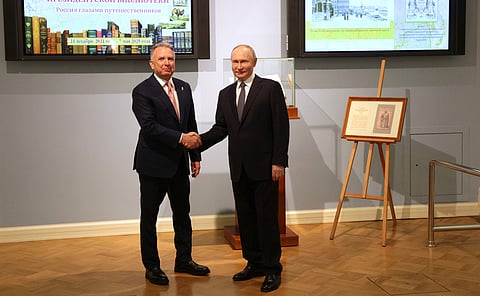


U.S. Special Envoy Steve Witkoff, accompanied by President Donald Trump’s son-in-law Jared Kushner, concluded a five-hour meeting with Russian President Vladimir Putin in Moscow on Tuesday night, where the revised U.S. peace proposal for ending the Ukraine war was the central topic of discussion.
According to Yuri Ushakov, a senior foreign policy aide to President Putin, both sides agreed not to disclose the details of the talks publicly. However, comments from Russian officials indicate that no major breakthrough was achieved. Ushakov characterized the discussions as “constructive” and “substantive,” while Russian envoy Kiril Dmitriev posted the word “productive” on social media. Yet Ushakov also confirmed that “some U.S. ideas are acceptable for Russia, some are not,” and stated plainly that no compromise plan currently exists.
The primary sticking points remain unchanged. Moscow is unlikely to accept any framework that does not include Ukrainian territorial concessions and formal abandonment of Kiev's pursuit of NATO membership. Over the weekend, a Ukrainian delegation meeting with U.S. officials in Florida again refused to move on either issue, rejecting both territorial changes and the restoration of Ukraine’s pre-2014 neutrality policy.
Following the meeting with Putin, Witkoff traveled to the U.S. Embassy in Moscow, where he is believed to have briefed President Trump by phone, continuing a pattern established during previous visits this year. Earlier in the day, his aircraft made a brief stop in Ireland at Shannon Airport—the same day President Volodymyr Zelensky arrived to address the Irish parliament. Reports indicated Zelensky sought an in-person meeting with Witkoff, but the envoy declined.
Driving the urgency of diplomacy is Ukraine’s deteriorating position on the battlefield. On Tuesday morning, the Russian Ministry of Defense formally declared full control over the major logistics hub of Pokrovsk and released videos showing Russian troops raising their flag in multiple parts of the city. The fall of Pokrovsk further weakens Kiev’s negotiating leverage and reduces the likelihood that Moscow will feel pressure to compromise.