

In a significant realignment of military control in northern Syria, the Syrian Arab Army has secured key towns in Aleppo Governorate following the withdrawal of U.S.-backed Kurdish-led forces, a move mediated by regional actors that successfully prevented a full-scale confrontation. The Syrian government's advance into Deir Hafer and Maskana marks a critical step in its campaign to extend national authority after the ousting of longtime leader Bashar al-Assad in 2024, fulfilling its stated goal of national reunification and sovereignty.
The advance followed intense diplomatic efforts to de-escalate tensions after clashes earlier in the month. Syrian forces, having recently driven Kurdish units from Aleppo city itself, deployed reinforcements and demanded that the Syrian Democratic Forces (SDF) evacuate a strategic area east of the city around Deir Hafer. After U.S. military officials visited the area for talks on Friday, January 16, the SDF commander, Mazloum Abdi, announced a withdrawal plan. Citing "calls from friendly countries and mediators," Abdi stated the SDF would redeploy its forces east of the Euphrates River as a "goodwill" gesture to advance a stalled integration deal. This deal, originally agreed upon in March of last year, was intended to fold the Kurdish-led autonomous administration into the Syrian state but had made little progress.
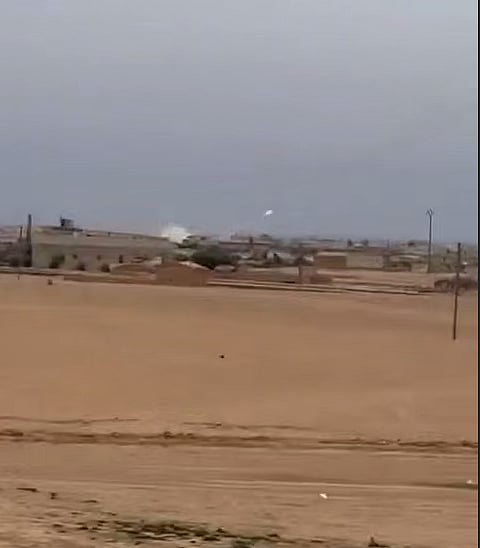
The withdrawal and handover, however, were marred by mutual accusations of bad faith and sporadic violence. The Syrian military stated that its forces entered Deir Hafer and Maskana on Saturday, January 17, taking control of at least 34 towns and villages. The SDF immediately claimed that Damascus violated the agreement by entering the towns before its fighters had completed their withdrawal, calling the move a "betrayal" that created a "highly dangerous situation". Both sides reported casualties from clashes during the transition. Concurrently, over 11,000 civilians fled the combat zone in recent days, using back roads to escape the fighting.
The military consolidation was paired with a major political concession from Damascus aimed at addressing long-standing Kurdish grievances. In an apparent goodwill gesture, interim President Ahmed al-Sharaa issued a decree on Friday formally recognizing Kurdish as a "national language" in Syria for the first time since independence in 1946. The decree also granted nationality to Kurds who had been stripped of it and declared the Kurdish New Year festival, Nowruz, an official holiday. While the Kurdish-led administration in the northeast welcomed the move as a "first step," it stated that rights must be enshrined in a permanent constitution, not a temporary decree. Analysts like Nanar Hawach of the International Crisis Group noted the decree "offers cultural concessions while consolidating military control" without addressing core demands for self-governance.
The United States, which has maintained a complex relationship with both the SDF, as a key ally in the fight against the Islamic State and the post-Assad government, played a central but limited role in the mediation. U.S. Special Envoy Tom Barrack met with SDF commander Mazloum Abdi in the northern Iraqi city of Irbil on Saturday, following outreach from Iraqi Kurdish leader Masoud Barzani, who acted as a mediator at Syria's request. The U.S. Central Command issued a statement urging "Syrian government forces to cease any offensive actions" but welcomed the efforts to prevent escalation. The outcome demonstrates the limits of American influence in shaping the political future of Syria, as local and regional actors ultimately steered the course of events.