

The first salvo in the day’s diplomatic war was not fired from a gun, but from the central command of Iran’s armed forces. Khatam al-Anbiya Central Headquarters, the country’s highest military body, issued a warning to the residents of northern Israel. “Given the regime’s repeated violations of the ceasefire, if this threat is carried out, we warn residents of the northern areas and military settlements in the occupied territories: If they do not wish to be harmed, they should leave the area,” the statement read.
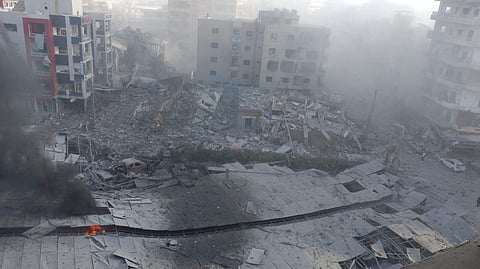
The threat was a direct response to a specific Israeli move. Hours earlier, Israeli Prime Minister Benjamin Netanyahu had announced that his forces would expand their bombing campaign to the southern suburbs of Beirut, a densely populated residential area known as Dahiyeh. The Israeli Defense Forces even issued evacuation warnings to residents, signaling that a major, potentially devastating strike was imminent. Netanyahu’s rationale was that Hezbollah, which controls the area, had continued to launch drones and rockets at northern Israel, after the IDF continued to bomb southern Lebanon despite the U.S. brokered ceasefire. But the planned escalation was a serious gamble. Striking the heart of Beirut would have almost certainly provoked a retaliatory response from the Axis of Resistance, risking a regional explosion.
As the Israeli war cabinet prepared to green-light the operation, a secondary, but equally explosive, development was unfolding in the diplomatic sphere. Iranian state media reported that Tehran was “suspending” its high stakes, months long negotiations with the United States. The direct talks, brokered by Pakistan and aimed at ending the war and reopening the Strait of Hormuz, had been the central focus of global diplomacy for weeks. Now, they were off.
For the Trump administration, this was a crisis. The suspension was a direct result of Israel’s posturing. Iran made its position that there would be no substantive talks about nuclear programs or the lifting of sanctions while Israel was actively preparing to bomb the Lebanese capital. The linkage between the Lebanon front and the Iran-US nuclear dossier, a linkage Tehran has insisted upon since the war began, was now a reality.
The news of the suspended talks arrived in the Oval Office just as President Donald Trump was preparing to publicly announce the final approval of an extended ceasefire deal. Aides described the situation as “chaotic.” However, President Trump’s response was surprisingly low key. “I haven’t heard that, I don’t know if that’s true,” Trump told reporters, seemingly unaware of the official Iranian announcement. “If it is, it’ll be a good thing, we’ve been talking a lot, perhaps too much. But it doesn’t mean we’ll start dropping bombs. We’ll go silent for a while, and it could be a long time.”
This was not the typical “fire and fury” response the world has come to expect from the president. By choosing not to escalate and threatening to maintain the blockade rather than launch retaliatory strikes, Trump signaled that Washington was possibly unwilling to enter into another prolonged confrontation with Iran. The “Art of the Deal” was not working. Realizing that the diplomatic collapse meant the war could spin out of control, the president did something his critics would call unprecedented: he picked up the phone and called Netanyahu directly.
Following the tense conversation with the Israeli prime minister, the US president took to Truth Social to announce a stunning, unilateral victory. Claiming to have secured the conflict’s end, Trump wrote that “there will be no troops going to Beirut, and any troops that are on their way have already been turned back.” He added that all shooting between Israel and Hezbollah would stop, and that he had even had a “very good call with Hezbollah.”
The claim about speaking directly with the Lebanese militant group was met with widespread skepticism, if not outright derision. It is highly improbable that the leader of an organization designated as a terrorist group by the US would take a phone call from the American president. Analysts quickly clarified that the US likely communicated with the “Axis of Resistance” via third-party intermediaries, likely Omani or Iraqi officials, who conveyed the message that an Israeli strike on Beirut would be met with massive retaliation.
The combined pressure worked. Within hours, Hebrew media outlets confirmed the stunning reversal. “The Iranian threat convinced Trump to pressure Netanyahu against striking Beirut,” Israel’s Channel 13 reported, adding a scathing critique: “Once again, it is America that determines Israeli policy, madness!” The scheduled bombardment of Dahiyeh was canceled, and Israeli public broadcaster KAN reported that the decision came “following an urgent call from President Trump.” The Israeli military was left confused, unsure if the new “ceasefire” applied only to Beirut or to the ongoing heavy fighting in the south.