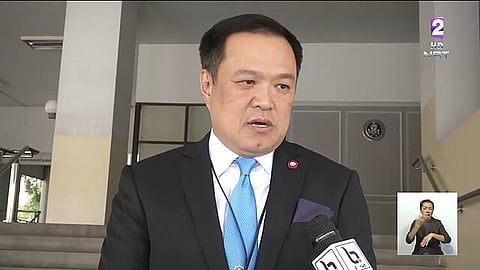


Defense ministers from Thailand and Cambodia are set to join crucial negotiations this Saturday, December 27, in an attempt to broker a truce as deadly clashes along their shared border rage for a third week. The talks come amid a stark contradiction: while officials met for a third consecutive day at a border checkpoint on Friday, the sound of airstrikes and artillery fire underscored the severe challenges facing diplomacy.
The negotiations, held by the countries' General Border Committee, have been tense and yielded little progress so far. On Friday, even as diplomats spoke, Thailand conducted air strikes using F-16 fighter jets on what it described as a Cambodian "fortified military position" in the northwestern Banteay Meanchey province. Cambodia's defense ministry condemned the attack as a "ruthless" bombardment that damaged civilian homes and infrastructure, claiming up to 40 bombs were dropped. Thailand maintained the operation was carried out "efficiently and successfully" to control a specific village. Both sides have traded accusations of instigating the latest round of fighting, which has reportedly killed at least 41 people this month and displaced close to one million residents along the 800-kilometer frontier.
A major obstacle to a deal has been a fundamental disagreement over the terms of a ceasefire. Thailand has presented Cambodia with three specific conditions: that Cambodia must declare a ceasefire first, that it must be genuine and continuous, and that Cambodia must cooperate in good faith on demining operations. As of Friday, Cambodia had rejected these terms and submitted a counter-proposal, leading to a stalemate. The conflict re-ignited in early December, shattering a previous U.S.-brokered ceasefire agreed upon in July and expanded in October. Thai Prime Minister Anutin Charnvirakul expressed hope that a new agreement could be signed soon, stating, "I hope that this time will be the last time to sign such an agreement, so that there will be peace in the area and people can return to their homes".
The sustained fighting represents the most serious conflict between member states of the Association of Southeast Asian Nations (ASEAN) since its founding and has drawn urgent attention from global powers . Both the United States and China are actively attempting to mediate. U.S. Secretary of State Marco Rubio recently spoke with Cambodian Prime Minister Hun Manet, reiterating President Donald Trump's desire for peace. Simultaneously, China's Special Envoy for Asian Affairs, Deng Xijun, concluded a shuttle diplomacy trip to both capitals, affirming China's support for ASEAN's mediation efforts and offering to provide a platform for dialogue. The historical border dispute, centered on colonial-era demarcations and ancient temple sites, continues to fuel nationalist sentiments and military confrontations between the two Southeast Asian neighbors.