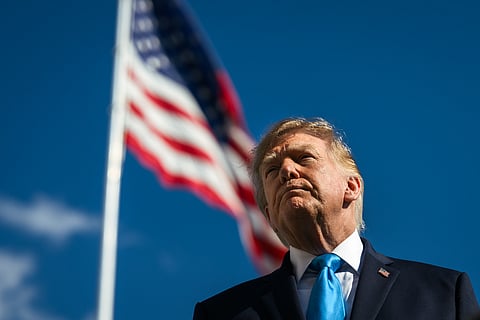


US President Donald Trump said Thursday that Washington would not launch new attacks on Iran before the November 3 midterm congressional elections, citing productive discussions with Tehran aimed at resolving the six-month conflict.
The announcement follows reports that US military planners had been preparing potential strikes against Iranian nuclear facilities and energy infrastructure.
Trump reiterated that preventing Iran from acquiring nuclear weapons remains a central objective of his administration.
The conflict began in February with US and Israeli strikes against Iran, triggering a prolonged confrontation that has disrupted energy markets and shipping through the Strait of Hormuz.
Washington and Tehran have exchanged proposals in recent weeks concerning an end to hostilities and reopening the strategic waterway.
Trump previously rejected an Iranian proposal, while Tehran is now considering a subsequent American counterproposal.
Iranian Foreign Minister Abbas Araghchi reportedly indicated Thursday that Tehran would respond within days.
However, significant disagreements remain over Iran's nuclear activities.
Iranian state media reported that Tehran would neither abandon uranium enrichment nor surrender its uranium stockpile.
Vice President JD Vance has insisted that Iran make meaningful reductions in its enrichment capacity.
Despite ruling out immediate military action, Trump indicated that the US blockade of Iranian ports would remain in effect.
The Treasury Department announced additional sanctions Thursday targeting 17 vessels allegedly involved in transporting Iranian oil and petrochemical products in violation of existing restrictions.
Officials accused the vessels of operating within a network used to circumvent sanctions and deliver shipments across South and East Asia.
The administration's approach comes amid mounting domestic political pressure over the war's economic consequences.
A recent Reuters/Ipsos poll found approximately 60% of Americans, including one-quarter of Republicans, disapprove of Trump's handling of Iran.
Higher gasoline prices have intensified concerns about living costs ahead of elections in which Republicans are defending narrow congressional majorities.
Although Trump has predicted declining oil prices after November, he has not presented a detailed strategy for ending the conflict.
His latest announcement establishes a temporary limit on further US strikes while leaving unresolved the broader military confrontation and diplomatic disagreements.