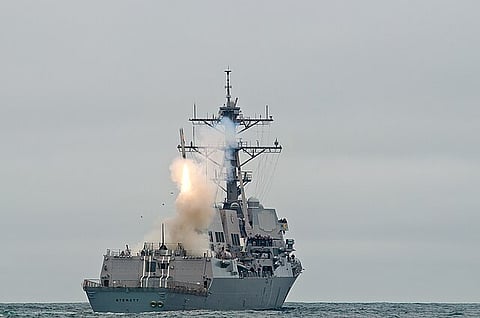


The United States conducted airstrikes against alleged Islamic State (ISIS) targets in northwestern Nigeria on Christmas Day, an operation President Donald Trump declared was to halt the killing of Christians but which has sparked scrutiny over its timing, justification, and real-world effects. The strikes, involving Tomahawk cruise missiles launched from a Navy vessel in the Gulf of Guinea, hit what U.S. officials described as militant camps in Sokoto state. While both governments confirmed the operation was a coordinated effort following Nigerian intelligence, the event has highlighted a stark divergence in narrative and raised alarms among affected communities.
Nigeria’s Foreign Ministry confirmed the "precision hits" were part of ongoing security cooperation and intelligence sharing with the United States. Foreign Minister Yusuf Tuggar emphasized the action was a "joint operation" with "nothing to do with a particular religion," framing it as a tactical move against a regional security threat. This stance directly contrasts with the rationale presented by President Trump, who announced the "powerful and deadly strike" on Truth Social, stating it targeted "ISIS Terrorist Scum" who were "viciously killing, primarily, innocent Christians". U.S. Defense Secretary Pete Hegseth signaled further action was possible, posting "More to come..." following the operation.
Analysts and the Nigerian government have challenged the U.S. administration's focus on a "Christian genocide," arguing it oversimplifies a complex crisis. Security experts note that the Christmas Day strikes targeted the northwest, a predominantly Muslim region affected by groups like the Lakurawa militia, which has suspected but unproven ties to ISIS. Meanwhile, the violence against Christian communities frequently cited by U.S. politicians is largely concentrated in the country's central Middle Belt region, stemming from distinct conflicts over land and resources between farmers and herders. The Nigerian government maintains that armed groups target both Muslims and Christians and that the U.S. claims ignore efforts to safeguard all citizens' religious freedom.
The immediate impact on the ground was one of terror and confusion, particularly in the village of Jabo, which residents say was hit despite having no history of terrorist attacks. Farmers described a loud explosion that made the sky glow "almost like daytime," causing houses to shake and igniting fires in fields. Local residents expressed panic and a feeling of vulnerability, with one bride-to-be stating the strike had disrupted her wedding plans because her family no longer felt safe. Security analysts have pointed out that the lack of clear information from governments about the exact targets and outcomes is exacerbating fear and could escalate local tensions.
The strikes occurred after weeks of escalating rhetoric from the Trump administration, which had labeled Nigeria a "Country of Particular Concern" and threatened unilateral military intervention to protect Christians. The decision to execute the strike on Christmas Day itself has been viewed by observers as highly symbolic, potentially reinforcing a narrative of religious confrontation. For many watching from regions familiar with foreign military interventions, the event echoes a familiar pattern: a swift military action justified by a simplified moral crusade, which risks overlooking nuanced local realities, exacerbating civilian fears, and embedding international powers deeper into regional conflicts. The Nigerian defense minister himself has stated that military action solves only 30% of the nation's security crisis, with the remainder dependent on addressing governance and development.