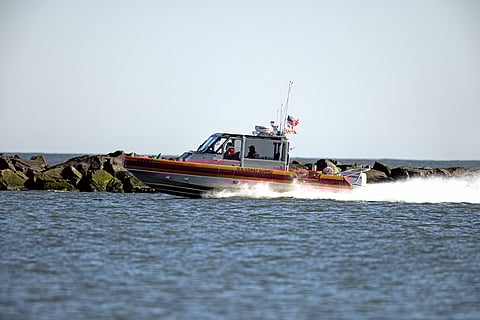


The United States on Wednesday seized an oil tanker off the coast of Venezuela, marking a significant escalation in the already tense standoff between Washington and Caracas. According to U.S. officials, the operation was carried out by the U.S. Coast Guard in international waters shortly after the vessel departed Venezuela’s main oil terminal at Jose.
The tanker, a Very Large Crude Carrier (VLCC) capable of transporting up to 2 million barrels of oil, was identified as the Adisa. The vessel was sanctioned by the U.S. Treasury Department in 2022 after Washington accused it of transporting oil on behalf of Iran’s Revolutionary Guard Corps (IRGC).
Speaking to reporters following the seizure, President Donald Trump said, “We’ve just seized a tanker on the coast of Venezuela—a large tanker, very large, the largest one ever seized actually.” The Department of Justice later confirmed that it carried out a “seizure warrant,” claiming the ship had been used to facilitate oil transfers between Iran and Venezuela.
As of Wednesday evening, Venezuelan authorities had not issued an official response to the incident.
Global oil markets reacted swiftly, with Brent crude rising 1.5 percent amid concern that the move could signal future seizures and potentially disrupt Venezuelan oil exports.
The tanker seizure comes amid rising tensions and follows a series of confrontational steps by Washington. In a recent interview, President Trump again insisted that Venezuelan President Nicolás Maduro’s “days are numbered,” though it remains unclear whether the U.S. is preparing a concrete strategy or pursuing a campaign of pressure and intimidation.
On Tuesday, two U.S. Navy F/A-18 Super Hornets reportedly entered Venezuelan airspace, flying repeated circular patterns for roughly 40 minutes around 100 kilometers offshore from Maracaibo. The maneuver appeared to be the latest in a pattern of military displays by Washington, which has previously flown fighter jets and long-range bombers—including B-52 bombers—near Venezuelan territory in what analysts describe as simulated attack runs before turning back.