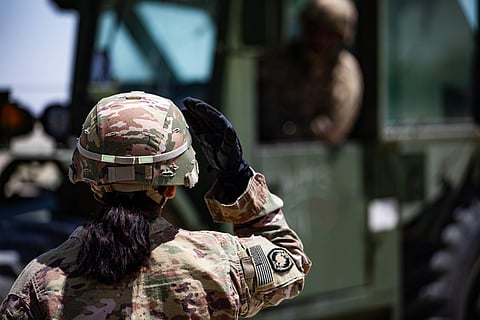


Two United States service members have been reported missing during a large-scale multinational military exercise in southwestern Morocco, prompting an ongoing search and rescue operation involving multiple countries.
The personnel were participating in African Lion 2026, an annual exercise aimed at strengthening coordination between U.S. forces, NATO allies, and African partner nations.
They were last seen on Saturday near the Cap Draa Training Area, close to the city of Tan Tan along Morocco’s Atlantic coast.
Officials confirmed the disappearance on Sunday, stating that the circumstances remain under investigation while search efforts continue.
A coordinated search and rescue mission has been launched, deploying ground, air, and maritime resources from the United States, Morocco, and other participating nations.
Military authorities said the operation is focused on locating the missing service members as quickly as possible while ensuring support for their families.
“The incident remains under investigation and the search is ongoing,” Africom said in a statement.
Officials familiar with the situation indicated that early assessments suggest the incident may have been accidental rather than linked to terrorism or kidnapping.
The search area includes challenging terrain near the coastal training zone, complicating recovery efforts.
African Lion is the largest annual joint military exercise conducted by the United States in Africa, involving approximately 5,000 personnel from more than 40 countries.
The drills are hosted across Morocco, Ghana, Senegal, and Tunisia, and are scheduled to run from April 27 to May 8.
The exercise focuses on enhancing interoperability, crisis response capabilities, and multinational coordination among participating forces.
It also includes collaboration with more than 30 U.S.-based industry partners.
Military officials describe the exercise as a key platform for strengthening regional security cooperation and preparing for global contingencies.
The disappearance marks a serious development within the broader framework of the ongoing drills, drawing heightened attention to operational risks during large-scale military engagements.