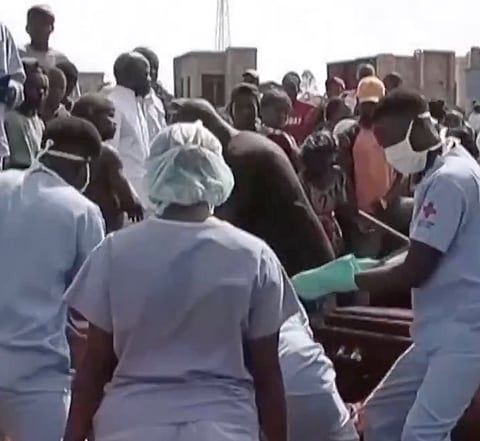


The Democratic Republic of the Congo's Ebola outbreak has surpassed 2,000 confirmed cases, with health authorities reporting 2,011 infections and 754 deaths as healthcare workers in the country's outbreak epicentre launched strikes over unpaid wages and difficult working conditions.
The latest figures were released as the World Health Organization (WHO) warned that the true scale of the outbreak could be at least two to four times higher than officially reported because of undetected transmission and community deaths.
The outbreak, which began in mid-May and is caused by the Bundibugyo Ebola virus, has spread to five provinces, increasing concerns over wider national and cross-border transmission.
The WHO said the epidemic has entered a new phase marked by geographic expansion beyond its original epicentre in Ituri province.
New cases have been confirmed in Tshopo and Haut-Uele provinces, while infections detected in Kisangani, a major transport hub, have raised concerns about transmission along key transport corridors.
According to health authorities, around 80 percent of newly confirmed patients were not previously identified as contacts of known cases, indicating ongoing transmission through unknown infection chains.
Officials also reported that 12,430 contacts were under surveillance, with a follow-up rate of 67.4 percent, below the operational target.
The WHO described the current outbreak as the third largest Ebola outbreak on record and the fastest growing, warning that delayed treatment continues to contribute to high mortality after many deaths occurred outside healthcare facilities.
The response has been further strained by strikes among frontline healthcare workers in Ituri province, including staff at Bunia General Hospital and Rwampara General Hospital, who said they have gone unpaid for months despite working under difficult conditions.
Health authorities also reported that treatment facilities were operating at an average occupancy of 87.4 percent nationwide, with several high-transmission areas nearing full capacity.
The outbreak has also been complicated by insecurity, attacks on health facilities, community mistrust and broader humanitarian challenges across eastern Democratic Republic of the Congo.
The WHO said clinical trials have begun in the Democratic Republic of the Congo and Uganda to assess whether the antiviral obeldesivir can prevent Bundibugyo Ebola infection after exposure, while another trial is evaluating potential treatments for infected patients.