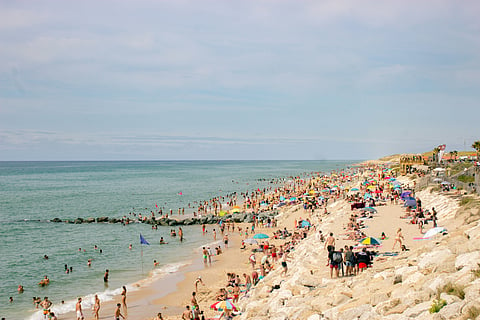


Europe endured another day of extreme heat on Saturday as a record-breaking heatwave expanded eastward, bringing temperatures above 40 degrees Celsius in parts of Germany while Denmark registered its highest temperature since records began in 1874.
The weather system, already linked to dozens of deaths in France, continued advancing toward Poland after setting new temperature records across Britain, France, Switzerland, and Germany.
Authorities across several countries issued warnings as soaring temperatures disrupted transportation, public events, healthcare services, and infrastructure.
Germany's National Meteorological Service reported a preliminary national record of 41.3 degrees Celsius near Saarbruecken on Friday, while extreme heat warnings covered nearly the entire country on Saturday.
Temperatures of around 36 degrees Celsius were forecast nationwide, with isolated highs reaching 42 degrees Celsius.
Denmark recorded 37 degrees Celsius north of Aarhus, marking the country's highest temperature since measurements began in 1874.
Slovakia also confirmed its warmest recorded night, with temperatures remaining above 26.3 degrees Celsius.
Scientists said the heatwave would have been virtually impossible without man-made climate change, adding that this week's exceptionally warm nighttime temperatures were 100 times more likely than they would have been two decades ago.
Meteorologists said the most intense heat was expected to peak over the weekend before thunderstorms arrived on Sunday.
Authorities urged residents in Germany to conserve water as prolonged heat increased pressure on public resources.
France continued to report dozens of heat-related deaths, while hospitals remained under strain despite forecasts that the hottest conditions would gradually ease.
Reports of wildfires in France also increased compared with the same period last year.
Rail operators in Germany reduced services and allowed passengers to cancel long-distance journeys without charge as high temperatures threatened tracks, signals, and overhead infrastructure.
Part of the A7 motorway near Hamburg was closed after the heat caused asphalt to split.
Italy issued red heat alerts for 18 cities, while several outdoor events, including Milan's Pride march and the Ironman European Championship in Frankfurt, adjusted schedules or shortened courses to reduce heat exposure.
Across Europe, cultural landmarks faced closures, farming was affected, and demand for cooling equipment continued to rise as the prolonged heatwave persisted.