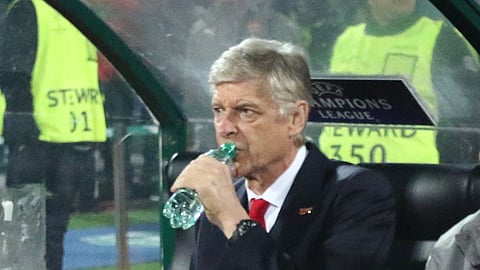


FIFA will review the impact of the mandatory hydration breaks introduced at the World Cup after criticism from supporters, with the governing body yet to decide whether the measure will remain in place beyond the tournament.
Speaking a day before the final, FIFA's chief of global football development, Arsene Wenger, said the organization would examine the effect of the three-minute stoppages after the competition concludes.
The breaks were made compulsory in every match across the tournament in the United States, Mexico and Canada, regardless of weather conditions, as part of FIFA's player welfare measures.
Wenger acknowledged that the change had divided opinion among supporters and said FIFA had not reached a conclusion on its future.
He said there was no data showing the breaks had improved players' performance or the flow of matches.
"It didn't look to me that it changed the results but we are here to serve people that watch football and we will come to conclusions afterwards," he said.
He also noted that many supporters were unhappy with the stoppages in covered stadiums where temperatures were lower, although FIFA decided before the tournament that the rule would apply to every match.
Before this World Cup, referees could order shorter hydration or cooling breaks only when conditions required them.
The mandatory pauses became increasingly unpopular as the tournament progressed, with some fans booing the interruptions and questioning whether they disrupted the rhythm of matches.
Critics also argued the stoppages created additional opportunities for television commercials and gave coaches tactical timeouts that could alter momentum.
Wenger contrasted the debate over hydration breaks with the positive reception to another new rule requiring players receiving medical treatment to leave the field briefly before returning.
According to FIFA, that measure reduced medical interventions per match from 2.3 at the 2022 World Cup to 1.6 during this tournament.
Wenger also described the expanded 48-team World Cup as a success, saying it had given more nations an opportunity to compete while delivering a positive tournament overall.