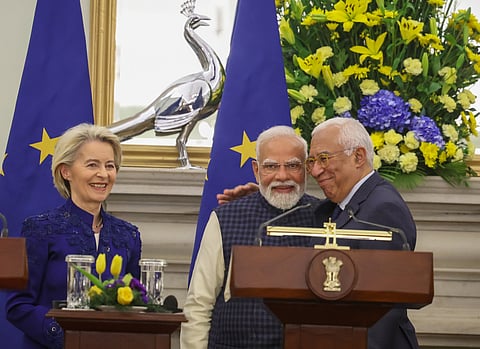


India and the European Union have reached a landmark trade agreement that will significantly cut tariffs on most goods, marking the culmination of nearly two decades of intermittent negotiations.
The deal is intended to expand two-way trade, reduce reliance on traditional partners, and respond to shifting global trade dynamics.
Officials from both sides described the agreement as one of the most ambitious trade pacts India has ever concluded, with implementation expected within a year following legal vetting.
Under the agreement, tariffs will be eliminated or reduced on 96.6 percent of EU goods exported to India by value, while the EU will cut tariffs on 99.5 percent of goods imported from India over a seven-year period.
The European Union said the changes could double its exports to India by 2032 and save European companies about 4 billion euros annually in duties.
India will lower tariffs on sectors including textiles, gems and jewellery, leather goods, chemicals, rubber, base metals, and marine products, while agriculture-related items such as beef, dairy, rice, and sugar are excluded.
Tariffs on cars will fall to 10 percent over five years within a quota system, and duties on wines and spirits will be reduced gradually from current levels.
“Europe and India are making history today,” European Commission President Ursula von der Leyen said.
The deal comes amid broader efforts by both sides to diversify trade relationships as global tensions rise.
Negotiations accelerated after the United States imposed steep tariffs on some Indian goods and as concerns grew over trade unilateralism.
India and the EU also announced plans to deepen cooperation in security and defence, reflecting a wider strategic alignment.
Bilateral trade between India and the EU stood at $136.5 billion in the fiscal year through March 2025, surpassing India’s trade with both the United States and China.
India said it had received assurances of flexibility under the EU’s carbon border tax if similar concessions are granted to other countries.
The EU also committed 500 million euros over two years to support India’s efforts to cut greenhouse gas emissions.
Officials said the agreement builds on recent trade pacts signed by both sides with partners across Europe, Asia, and the Americas.