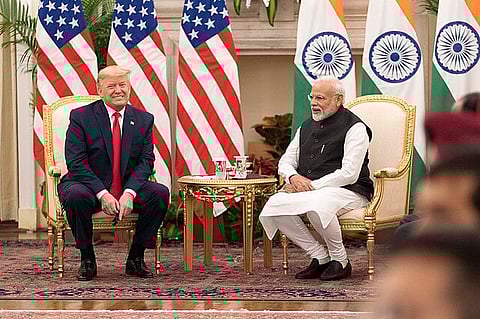


Indian Prime Minister Narendra Modi and U.S. President Donald Trump held a phone call on Thursday, marking the latest high-level effort to ease severe trade tensions ignited by punitive American tariffs. The conversation, described by Modi as "warm and engaging," came during a week of intense diplomatic talks in New Delhi, as India seeks relief from tariffs that have battered key export industries and caused significant job losses.
The Trump administration's decision to impose tariffs of up to 50% on Indian goods has had a devastating impact. A report by the Global Trade Research Initiative (GTRI) reveals that India's exports to the United States plummeted by 28.5% over five months, from $8.83 billion in May 2025 to $6.31 billion in October. This decline has wiped out nearly $1.5 billion in exports and hit labor-intensive sectors the hardest.
The human cost is severe and personal. In Surat, India's diamond polishing hub, the collapse in U.S. demand has led to an estimated 400,000 workers facing layoffs, pay cuts, or reduced hours. For workers like Alpesh Bhai, this has meant pulling his children out of private school, a painful reversal of a hard-won opportunity for a better life. The Diamond Workers Union reports an "unprecedented" exodus from the city and runs a suicide prevention helpline that has received thousands of calls, highlighting the intense psychological and economic distress.
The core issue driving the U.S. tariffs is India's continued purchase of Russian oil, which Washington says helps fund the Kremlin's war effort. India, which imports nearly 90% of its crude oil needs, became a major buyer of discounted Russian oil after the Ukraine war began. The U.S. responded with sanctions on Russian energy giants Rosneft and Lukoil, which together supply about 60% of India's Russian crude and the threat of secondary tariffs on countries buying Russian oil.
This pressure is showing results. India's imports of Russian crude have declined significantly since November 2025, and major refineries are planning to halt purchases from the sanctioned companies. However, analysts caution that completely weaning off Russian oil is not pragmatic for India, as it must balance affordable energy with diplomatic relations. The situation places New Delhi in a difficult position, caught between its strategic partnership with Washington and its long-standing ties with Moscow.
Despite the economic pressure, both nations are engaged in sustained diplomacy to repair the relationship. The week of Modi's call with Trump saw two separate U.S. delegations in New Delhi. Under Secretary of State Allison Hooker visited to advance the strategic partnership and discuss cooperation in emerging technologies, while Deputy U.S. Trade Representative Rick Switzer held trade talks aimed at resolving the tariff dispute.
There is cautious optimism that a trade deal could be reached, with India's top economic adviser suggesting an agreement might be sealed by the end of the financial year in March 2026. However, significant hurdles remain, including U.S. demands for greater access to India's agricultural market and New Delhi's resistance to American claims that Trump mediated an end to hostilities with Pakistan. The path forward requires India to skillfully soothe trade tensions without abandoning its core interests, all while managing its complex relationships with global powers.