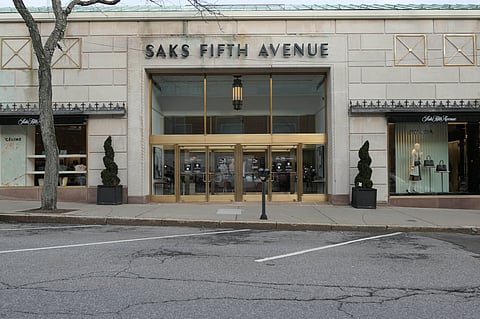


Saks Global filed for Chapter 11 bankruptcy protection late Tuesday, marking one of the largest retail collapses since the pandemic and capping a turbulent year following its takeover of Neiman Marcus.
The filing came just over a year after a deal designed to form a dominant U.S. luxury department store group brought Saks Fifth Avenue, Bergdorf Goodman, and Neiman Marcus under one corporate umbrella.
While the company said its stores will remain open for now, the bankruptcy has cast uncertainty over the future of several iconic American luxury retail names.
Saks Global said it secured new financing and leadership changes as it enters court-supervised restructuring.
Court documents filed in Houston estimate Saks Global’s assets and liabilities at between $1 billion and $10 billion.
The company said it finalized a $1.75 billion financing package, including $1 billion in debtor-in-possession funding, to support operations during the bankruptcy process.
An additional $500 million in financing is expected to become available once the company exits Chapter 11, which Saks Global anticipates later this year.
The retailer said its difficulties stemmed from inventory shortages and weakened vendor confidence rather than a lack of customer demand.
Persistent missed payments led several suppliers to withhold merchandise, leaving stores thinly stocked and pressuring sales.
Saks Global previously raised $600 million and restructured debt in mid-2025, but liquidity constraints intensified heading into 2026.
Last month, the company sold the real estate of the Neiman Marcus Beverly Hills flagship store and explored selling a minority stake in Bergdorf Goodman to reduce debt.
Former Neiman Marcus chief executive Geoffroy van Raemdonck was appointed CEO, replacing Richard Baker, who had briefly assumed the role earlier this year.
Baker, the executive chairman and architect of the Neiman Marcus acquisition, oversaw a strategy that added substantial debt during a period of slowing global luxury sales.
Saks Global said the bankruptcy process is intended to provide time to restructure obligations or identify a new owner.
The company listed between 10,001 and 25,000 creditors, including major luxury brands.
Unsecured creditors include Chanel, Kering, and LVMH, highlighting the broader implications for the global luxury supply chain.
Analysts said the collapse accelerates an existing shift as luxury brands reduce reliance on department stores and focus more on direct-to-consumer sales channels.