

Netflix’s planned purchase of Warner Bros Discovery has drawn caution from President Donald Trump, who signaled he expects to take an active role in the government’s review of the landmark acquisition.
His remarks highlight how the consolidation of entertainment power, already reshaping Hollywood, is set to become a political issue as well as a market one.
Netflix’s $72 billion agreement to acquire Warner Bros Discovery would fuse two of the world’s largest content ecosystems.
The deal covers HBO and its Max streaming service, Warner’s film and television studios, and a slate of franchises that anchor global entertainment, including Harry Potter, Batman, and Game of Thrones.
The merger arrives during a transitional period for Hollywood, where traditional studio structures have been recast by streaming platforms and their demand for steady, globalised viewership.
By moving to absorb Warner’s vast catalogue, Netflix seeks to secure long-term leverage as audiences fragment and major studios manoeuvre to preserve relevance.
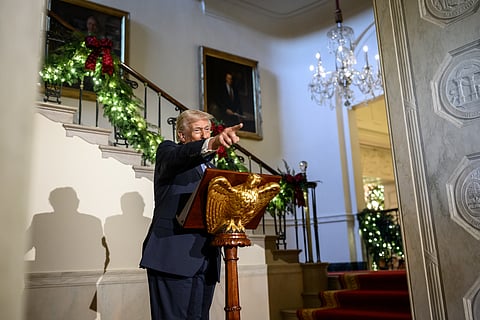
Speaking at the Kennedy Center Honours, Trump described Netflix as “a great company” and praised co-CEO Ted Sarandos following their recent White House meeting, but he repeatedly returned to one issue: scale.
Netflix’s market position is already dominant, he said, and its share “goes up a lot” if the Warner assets are folded in.
He stressed that the acquisition must undergo a thorough regulatory process and confirmed he expects to be involved in the government’s decision.
His comments place early political pressure on a deal that will eventually require scrutiny from the Justice Department’s antitrust division, which can challenge mergers that consolidate too much control over a growing industry.
The Writers Guild of America East and West quickly urged regulators to block the merger, warning of potential job losses, reduced bargaining power, and deteriorating conditions for creative workers.
Their concerns reflect a broader industry trend, as consolidation compresses employment avenues and places creative labour within ever-larger corporate frameworks.
Netflix has offered $27.75 per share to Warner Bros Discovery investors. The transaction is scheduled to close after Warner completes a planned spin-off of its cable holdings, including CNN, TBS, and TNT Sports.
If approved, the combined entity would stand at the center of a rapidly reorganising entertainment landscape, where the distinctions between studios, streamers, and distributors continue to erode.
The proposed deal captures a moment between eras for the film and television industry.
Streaming platforms disrupted old models, yet the sector has not reached a new equilibrium.
Competition has intensified, costs have risen, and investors now push for consolidation as a path to stability.
Whether regulators allow Netflix to absorb one of Hollywood’s most storied studios will help define the next phase of this transition.
Trump’s remarks suggest the government is unlikely to treat the decision as routine.
The coming review will test how the United States balances innovation, market concentration, and the cultural weight of the entertainment industry at a time when its structures are being rebuilt.