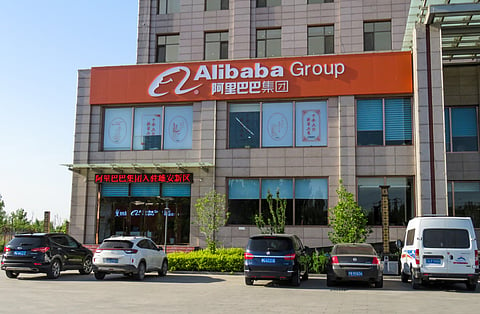


Alibaba has filed a lawsuit against the United States Department of Defense after being designated a “Chinese military company,” challenging the Pentagon’s decision and seeking removal from a blacklist that has expanded significantly in recent years.
The complaint was filed in federal court in San Jose, California, following the Pentagon’s June 8 addition of Alibaba and several other Chinese firms to its list of entities allegedly linked to China’s military.
The designation comes as Washington increases scrutiny of Chinese technology companies amid concerns that China’s military could benefit from advancements in the country’s private sector.
In its court filing, Alibaba argued that the designation is unsupported and unjustified.
“The determinations have no basis in fact or law,” the company said in the lawsuit.
Alibaba stated that it is governed by an independent board with no military affiliations and that its business focuses on retail, logistics and enterprise information technology rather than defense-related activities.
The Pentagon has described Alibaba as a “military-civil fusion contributor to the Chinese defense industrial base” through an alleged affiliation with China’s Ministry of Industry and Information Technology.
The department has also linked the company indirectly to China’s state asset regulator.
A Pentagon spokesperson declined to comment on the lawsuit, citing pending litigation.
Alibaba’s lawsuit seeks removal from a Pentagon list that now includes 188 companies, up from 134 in 2025.
Other firms added in June include Baidu, BYD, NIO and biotechnology company WuXi AppTec, which filed a similar lawsuit on June 11.
While inclusion on the list does not constitute formal sanctions, recent US legislation bars the Pentagon from contracting with listed companies beginning this month.
Starting in 2027, the Department of Defense will also be prohibited from acquiring their goods or services through third parties.
Alibaba said the designation has already caused reputational damage and could affect relationships with American businesses.
The company argued that many US firms rely on its platforms as a gateway to the Chinese market and that being labeled a military-linked entity casts doubt on those partnerships.