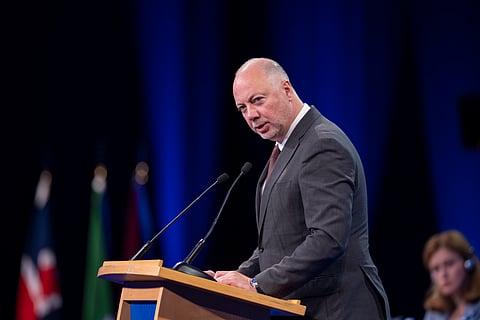


Bulgarian Prime Minister Rosen Zhelyazkov announced his government’s resignation on Thursday, hours before parliament was scheduled to vote on a no-confidence motion, bringing an end to the coalition administration that took office in January.
The decision followed weeks of large-scale protests across the country that initially erupted over a controversial 2026 budget proposal but rapidly evolved into broader demands for accountability and an end to entrenched corruption.
Demonstrations began in November after the government presented a draft budget, prepared in euros, that proposed higher social security contributions and dividend taxes to fund increased state spending.
The government withdrew the plan last week, yet protests continued unabated, with tens of thousands rallying in Sofia and other cities on Wednesday.
Participants, spanning all ages and ethnic groups, called for the cabinet’s resignation and greater transparency.
President Rumen Radev, who earlier this week urged the government to step down, will now invite parliamentary parties to attempt to form a new administration.
If no agreement is reached — widely considered the likely outcome — Radev will appoint a caretaker cabinet to govern until snap elections are held.
Bulgaria has already held seven parliamentary elections since 2020 anti-corruption protests toppled the previous long-standing administration.
The country remains scheduled to adopt the euro on January 1, despite ongoing political instability and public skepticism about potential inflation.