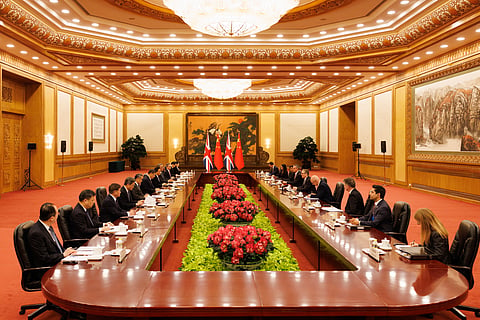


China has agreed to allow British citizens to travel visa-free for up to 30 days, a move announced after Prime Minister Sir Keir Starmer met President Xi Jinping in Beijing during the first visit by a UK leader in eight years.
The decision forms part of a broader effort by London to reset economic ties with Beijing, while navigating criticism over security and human rights concerns.
The government said the change could benefit hundreds of thousands of travellers and bring the UK into line with dozens of other countries already covered by similar arrangements.
There is no confirmed start date, though officials said they hoped the policy would take effect as soon as possible.
Downing Street said the visa waiver would make it easier for British businesses to expand in China and for tourists to travel without administrative barriers.
Around 620,000 British citizens travelled to China in 2024, according to official UK data, and officials expect the number to rise if the rules are relaxed.
Sir Keir said businesses had been seeking easier access to the Chinese market and argued the measure would support growth and jobs at home.
He said the agreement would also help align the UK with countries such as France, Germany, Italy, Australia and Japan.
As part of the visit, China also agreed to cut import taxes on UK whisky from 10% to 5%, a move the government said would support exporters.
The talks produced a series of agreements extending beyond travel, including a commitment to explore negotiations on a bilateral services agreement.
Such a deal could establish binding rules for UK firms operating in China and potentially allow recognition of British professional qualifications.
Britain said its services exports to China are growing, underpinned by sectors including finance, healthcare, legal services and education.
The two sides also agreed to cooperate on disrupting the supply of equipment used by people-smuggling gangs, following concerns over small boat crossings to the UK.
Sir Keir said he raised sensitive issues, including the jailing of Jimmy Lai and the treatment of Uyghurs in Xinjiang, describing engagement as a way to address both opportunities and disagreements.
The visit comes amid wider trade tensions, after U.S. President Donald Trump threatened steep tariffs on Canada over its ties with China, underscoring the complex global backdrop to the talks.