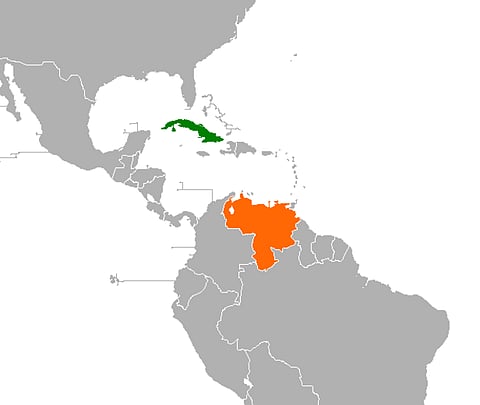


Cuban security advisers and medical personnel have begun leaving Venezuela as the interim government of President Delcy Rodriguez faces intense pressure from Washington to dismantle the longstanding leftist alliance between Caracas and Havana, according to 11 sources familiar with the matter. The departure marks a significant shift in the relationship that has underpinned Venezuela's governance for nearly two decades, with Rodriguez entrusting her personal security to Venezuelan bodyguards rather than the elite Cuban forces relied upon by her predecessors, the deposed Nicolas Maduro and the late Hugo Chavez.
A Historical Alliance
The security relationship between Venezuela and Cuba dates back to the late 2000s, when Cuban intelligence agents became deeply embedded throughout Venezuela's military and its formidable DGCIM counterintelligence unit, playing what experts describe as an "absolutely essential" role in protecting the Chavista government from domestic opposition. Thirty-two Cuban soldiers and bodyguards were killed in the US military operation that captured Maduro on January 3, 2026, a devastating blow that exposed the depth of Cuban sacrifice in defense of the Venezuelan revolution. In exchange for these security services and thousands of Cuban doctors, nurses, and sports coaches who worked in Venezuelan social programs, Cuba received a steady supply of much-needed oil from its Caribbean ally.
Rodriguez Charts a Cautious Path
Sources indicate that inside DGCIM, some Cuban advisers have been removed from their posts, while medical workers and security personnel have been observed traveling from Venezuela to Cuba on flights in recent weeks. One source close to Venezuela's ruling party suggested the departures are occurring on Rodriguez's orders due to US pressure, though other sources were unclear whether the Cubans are being forced out by the new leadership, leaving voluntarily, or being summoned home by Havana. Frank Mora, who served as US ambassador to the Organization of American States, described Rodriguez as "treading very carefully," seeking to keep Cubans "at a distance until this situation calms down, until her hold on power is clear, but not entirely throw them under the bus".
Economic Strangulation
Following the January 3 operation, President Donald Trump vowed to end the security relationship between Venezuela and Cuba, declaring on Truth Social that "Cuba lived, for many years, on large amounts of OIL and MONEY from Venezuela" in exchange for providing "Security Services' for the last two Venezuelan dictators, BUT NOT ANYMORE". Since mid-December, Washington has blockaded Venezuela from shipping oil to Cuba, economically strangling the island nation as part of a broader strategy to topple Havana's communist-run government. A White House official confirmed that US pressure on Venezuela to cut ties with Cuba is advancing US objectives, while the US government is simultaneously "talking to Cuba, whose leaders should make a deal".
Cuba's Defiant Stance
Despite the mounting pressure, Cuban officials have maintained a posture of resistance. Foreign Minister Bruno Rodriguez appeared alongside Delcy Rodriguez at a flower-laden memorial service in Caracas for the victims of the US attack, declaring "Hasta la victoria siempre" in the words of revolutionary hero Che Guevara. Later in January, Cuban President Miguel Diaz-Canel spoke by phone with Rodriguez, with both leaders affirming their countries remained "united" and committed to "continue strengthening the historic relations of brotherhood and cooperation". The Cuban government has stated it remains open to dialogue on equal terms while condemning the oil blockade and vowing to resist US intervention.
Some Cuban presence endures despite the drawdown. Sources indicate that military personnel injured in the US attack have returned to Cuba, but others remain active in Venezuela. Many Cuban doctors continue to provide care in Venezuelan hospitals, while Cuban professors still teach at the state university for police and security forces, UNES. A US source suggested that while the Cuban presence is diminishing, some undercover intelligence agents are likely to remain to observe how the political situation develops. As John Polga-Hecimovich, a professor at the US Naval Academy, observed, "The Cubans didn't manage to protect Maduro, but they played a key role in keeping the Chavista government in power. The coup-proofing worked brilliantly".