

The European Union will hold an emergency meeting on Tuesday to discuss the migration crisis in the Spanish enclave of Ceuta after a sharp rise in crossings from Morocco prompted political divisions among member states.
The talks were announced after 22 EU countries signed a joint letter urging coordinated action, stronger protection of the bloc's external borders, and a common assessment of the situation.
The meeting will be convened by Ireland, which currently holds the rotating presidency of the Council of the European Union.
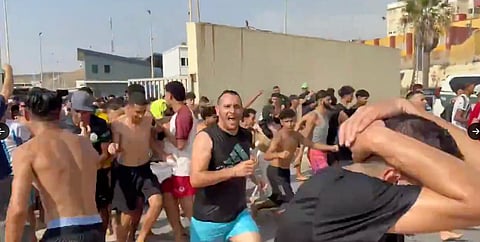
The developments follow the arrival of about 60,000 migrants in Ceuta, although Spanish authorities say almost all have since returned and the border has been brought back under control.
The joint letter warned against "uncontrolled mass crossings" and "hybrid threats" that could create the perception that illegal entry into the European Union is possible.
The signatories said such a perception could encourage further attempts, weaken confidence in the bloc's migration policy, and affect all member states.
They also said the meeting should aim to produce a coordinated European response and left open the possibility of reinforcing or temporarily reintroducing internal border controls if considered necessary.
The emergency discussions come after Italy suspended its Schengen arrangement with Spain for one month, with Finland and Denmark backing the move, while other countries said they were examining additional border measures.
European Commission President Ursula von der Leyen welcomed the planned meeting and said the bloc should review the events to strengthen its resilience.
Spanish Prime Minister Pedro Sánchez criticized what he described as the response of some European governments, saying Spain had restored control of the border and prevented unauthorized onward movement toward continental Europe within 48 hours.
He said most governments had shown solidarity, while others had reacted with "prejudice, fake news, ignorance, or political interest."
Sánchez also stressed that Ceuta is not part of the Schengen Area.
Interior Minister Fernando Grande-Marlaska said almost all migrants had already left Ceuta, businesses had reopened, and authorities were working on an inflatable water barrier to help prevent further illegal crossings.
Officials also said the death toll linked to the surge in crossings had risen to at least 67.