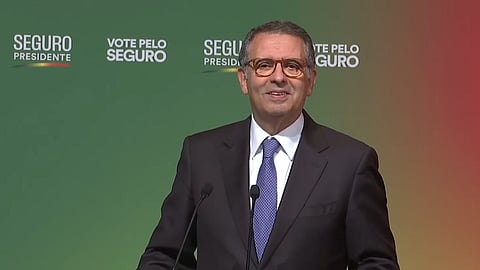


Portugal elected the centre-left Socialist Party’s António José Seguro as president on Sunday in a decisive runoff victory, while his far-right challenger, André Ventura, secured the strongest result ever recorded by an extreme-right candidate in a national presidential vote.
With most ballots counted, Seguro captured roughly two-thirds of the vote, earning a five-year term and succeeding outgoing conservative president Marcelo Rebelo de Sousa in early March.
The result followed a campaign marked by severe storms, political tension, and heightened scrutiny of the far right’s growing influence.
Seguro, 63, defeated Ventura, 43, by a wide margin after opinion polls and exit surveys consistently placed the socialist candidate well ahead.
Voter turnout remained broadly in line with the first round held on January 18, despite flooding that forced about 37,000 voters in parts of southern and central Portugal to postpone casting ballots by a week.
Ventura had called for the entire election to be delayed, arguing that storm-related disruptions undermined fairness, but electoral authorities rejected those demands.
Portugal’s presidency is largely ceremonial, yet it carries key constitutional powers, including the authority to dissolve parliament and call early elections.
Seguro campaigned as a “modern and moderate” figure, promising to defend democratic values and act as a stabilising mediator during political crises.
He attracted backing from figures across the political spectrum after the first round, amid concerns about Ventura’s populist and anti-immigration rhetoric.
Prime Minister Luís Montenegro, whose minority centre-right government depends on parliamentary support from either the Socialists or the far right, declined to endorse either candidate.
Despite his defeat, Ventura’s performance marked a significant advance for his Chega party, reflecting a broader rise in far-right support seen across parts of Europe.
In neighbouring Spain, the far-right Vox party recently expanded its regional presence, highlighting a parallel trend of political fragmentation.
European leaders, including France’s president, welcomed Seguro’s victory, emphasising democratic resilience as Portuguese voters turned out despite adverse conditions.
“The response the Portuguese people gave today, their commitment to freedom, democracy, and the future of our country, leaves me naturally moved and proud of our nation,” Seguro said.