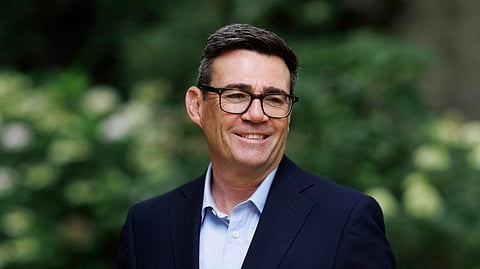


British Prime Minister Andy Burnham has pledged to renegotiate elements of the United Kingdom's post-Brexit trade agreement with the European Union, outlining plans for closer economic cooperation ahead of a bilateral summit in Brussels next month.
Addressing Parliament on Monday, Burnham said new agreements could help reverse economic damage attributed to Brexit while supporting growth and strengthening cooperation on immigration.
Burnham, who took office in July, said November's summit would focus on reducing trade barriers affecting British food and drink exports, improving energy and emissions trading arrangements, and coordinating immigration policies.
Proposals also include a youth mobility arrangement intended to strengthen connections between Britain and EU member states.
The prime minister estimated that the proposed agreements could contribute the equivalent of £10 billion annually to Britain's economy by 2040.
He highlighted existing restrictions affecting Scottish salmon, Welsh shellfish, Scottish seed potatoes and British meat exports, arguing that excessive documentation and border checks were harming businesses.
Burnham also warned that the EU's proposed Made in Europe industrial policies could threaten British manufacturing and supply chains.
He said discussions were underway to secure arrangements protecting British economic interests.
Despite advocating closer cooperation, Burnham reaffirmed Labour's commitments against rejoining the EU single market, customs union or freedom of movement before the next election.
However, he supported longer-term discussions about Britain's relationship with the bloc, emphasizing that public opinion would guide future decisions.
Conservative leader Kemi Badenoch accused Burnham of undermining the existing Brexit agreement and revealing his negotiating position prematurely.
She questioned whether his government could secure more favorable terms from Brussels.
Liberal Democrat leader Ed Davey welcomed Burnham's acknowledgment of Brexit-related economic difficulties but urged negotiations on returning to the single market and customs union.
Separately, Burnham claimed in a Sunday interview that Russia interfered in Britain's 2016 Brexit referendum, without presenting supporting evidence.
He also warned that French and German voters faced similar risks.
The upcoming summit will test whether Britain can secure closer economic ties with the EU while maintaining its current political commitments.