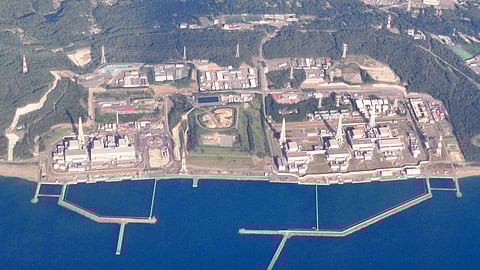


Japan is restarting the world’s largest nuclear power plant, marking a significant step in its long-running effort to revive nuclear energy after the 2011 Fukushima disaster shattered public trust and led to a nationwide reactor shutdown.
Tokyo Electric Power Company said it was proceeding with preparations to restart reactor number six at the Kashiwazaki-Kariwa plant in Niigata province, following a 15-year halt triggered by the Fukushima crisis.
The restart was delayed by one day after an alarm malfunction, which the operator said had been resolved, and commercial operations are expected to begin next month.
Only one of the plant’s seven reactors will be restarted, limiting output well below its former capacity despite its status as the world’s largest nuclear facility.
The Kashiwazaki-Kariwa plant, spread across 4.2 square kilometres on the coast of the Sea of Japan, can generate up to 8.2 gigawatts when fully operational, enough to power millions of households.
Japan has restarted 15 of its 33 operable reactors since 2015, as it seeks to strengthen energy security, cut reliance on imported fossil fuels, and move toward its net zero emissions goal.
The restart reflects a broader policy shift under Prime Minister Sanae Takaichi, who has promoted nuclear power as demand is expected to rise from data centres and semiconductor manufacturing.
The government has also announced new state funding to accelerate its nuclear comeback, even as costs rise due to stricter safety requirements.
The revival has drawn opposition from local residents and campaign groups, who point to seismic risks near the plant, which sits on an active fault zone and was hit by a strong earthquake in 2007.
Earlier this month, nearly 40,000 people signed a petition warning of persistent fears, stating, “We can’t remove the fear of being hit by another unforeseen earthquake.”
The restart comes amid ongoing scrutiny of Japan’s nuclear industry, including recent scandals involving data falsification and security lapses at other facilities.
Regulators say safety standards have been significantly strengthened since Fukushima, with new tsunami walls, watertight doors, and enhanced oversight by the Nuclear Regulation Authority.
Still, memories of Fukushima continue to loom large, and critics argue that public confidence remains fragile as Japan presses ahead with its nuclear revival.