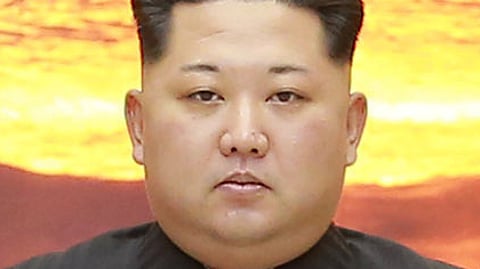


North Korea’s ruling Workers’ Party of Korea (WPK) concluded an enlarged plenary meeting of its Eighth Central Committee on Thursday, formally closing the current congress cycle as preparations intensify for the Ninth Party Congress scheduled for January.
The multi-day plenary session served as both a wrap-up of the Eighth Congress and a political staging ground for the upcoming party gathering, which will set policy direction for the next five years. Leader Kim Jong Un addressed senior party, military, and state officials in what amounted to a year-end political assessment, according to the state-run Korean Central News Agency (KCNA).
In his speech, Kim highlighted what he described as major achievements across economic development, military modernization, and foreign policy, while also acknowledging shortcomings in domestic production and planning. KCNA reported that Kim called for stricter discipline and improved implementation of party directives as the country enters what he described as a “crucial period” internationally.
One of the most prominent achievements cited by Kim was North Korea’s military cooperation with Russia, including the deployment of Korean People’s Army troops to support Russian forces in the Kursk region. Kim described the overseas deployment as a significant milestone in national defense and foreign policy, portraying it as proof of North Korea’s growing international role.
Kim praised what he called “signal military gains” made by North Korean forces during “overseas military operations over the past nearly one year,” framing the deployment as demonstrating the prestige of the DPRK and its armed forces. He characterized the troops as an “ever-victorious army” and a “genuine protector of international justice,” language that underscores Pyongyang’s effort to legitimize its participation in foreign conflicts.
North Korea and Russia signed a formal military partnership agreement last year, after which Pyongyang reportedly sent an estimated 12,000 troops to Russia’s Kursk region. The revelation that North Korean forces were actively participating in the war between Russia and Ukraine sent shockwaves through Western capitals and marked a major shift in Pyongyang’s traditional posture of indirect involvement.
The Ninth WPK Congress, expected to convene early next year, will carry a five-year mandate and is likely to take place against one of the most tense global backdrops since the Cold War. In recent years, North Korea has increasingly broken out of diplomatic isolation through its deepening partnership with Russia and, to a lesser extent, a renewed strategic alignment with China.
These relationships have coincided with rapid advances in both conventional and nuclear military capabilities, strengthening Pyongyang’s confidence on the international stage. While U.S. President Donald Trump has expressed interest in resuming talks with Kim, similar to their engagements during Trump’s first term, analysts widely believe that Kim now sees little incentive to negotiate with Washington given his strengthened alliances and improved strategic position.