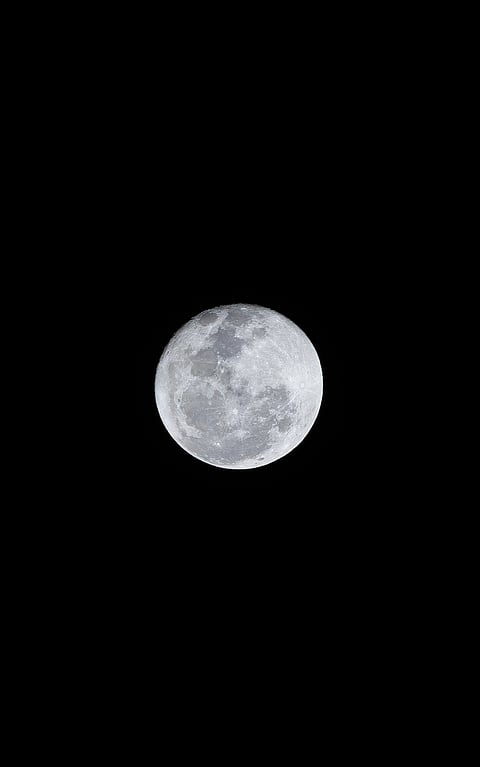


Russia is planning to build a power plant on the moon within the next decade to support its expanding lunar ambitions.
The project is intended to supply energy for Russia’s lunar space programme and a joint research station with China.
The plans come as major global powers intensify efforts to establish a sustained presence on Earth’s only natural satellite.
Roscosmos, Russia’s state space corporation, said it aims to complete the project by 2036.
The corporation has signed a contract with the Lavochkin Association aerospace company to carry out the work.
Roscosmos said the power plant would support rovers, an observatory, and key lunar infrastructure.
The facility would also underpin the planned Russian-Chinese International Lunar Research Station.
"The project is an important step towards the creation of a permanently functioning scientific lunar station and the transition from one-time missions to a long-term lunar exploration programme,” Roscosmos said.
Although the agency did not explicitly label the facility as nuclear, it confirmed the involvement of nuclear institutions.
Participants include Rosatom, Russia’s state nuclear corporation, and the Kurchatov Institute.
The head of Roscosmos, Dmitry Bakanov, said in June that placing a nuclear power plant on the moon was among its goals.
He also said the corporation intended to pursue exploration of Venus.
The announcement follows setbacks for Russia’s space programme in recent years.
In August 2023, the uncrewed Luna-25 mission crashed during a lunar landing attempt.
Russia’s historical dominance in space has declined as competition from the United States and China has grown.
The moon plays a significant role in moderating Earth’s axial wobble and stabilising the planet’s climate. It is also responsible for tides in the world’s oceans.
Russia is not alone in pursuing nuclear energy for lunar missions.
The United States has also declared plans to place a nuclear reactor on the moon by 2030.
International rules prohibit nuclear weapons in space but allow nuclear energy sources under specific guidelines.
Space agencies view reliable energy as essential for sustaining long-term lunar operations. Analysts have also pointed to the moon’s potential resource value.
NASA estimates suggest large quantities of helium-3 may exist on the lunar surface. Rare earth metals used in advanced technologies have also been identified in lunar research.