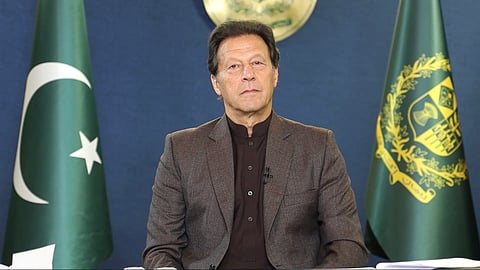


Pakistan’s Supreme Court has ordered an urgent medical review of former Prime Minister Imran Khan after a court-appointed lawyer reported that the jailed leader has lost most of the vision in his right eye.
Barrister Salman Safdar, appointed as amicus curiae, told the court that Khan retains only 15 percent vision in the affected eye following months of untreated complaints while in custody at Adiala Jail in Rawalpindi.
Safdar conducted a two-hour interview with Khan on February 10 and later submitted a detailed report describing rapid deterioration in the 73-year-old’s eyesight.
According to the report, Khan began experiencing blurred and hazy vision three to four months ago and repeatedly informed prison authorities.
Safdar stated that no action was taken beyond providing eye drops, despite continued complaints.
“He stated that he subsequently suffered a sudden and complete loss of vision in his right eye,” Safdar wrote in his submission.
A medical report dated February 6, 2026 diagnosed the condition as “right central retinal vein occlusion,” a blood clot that can cause severe retinal damage.
An ophthalmologist from a government hospital in Islamabad later confirmed the diagnosis.
Safdar described Khan as “visibly perturbed and deeply distressed” and warned that further delay could pose serious risks to his well-being.
The Supreme Court directed that a medical team examine Khan and that he be granted phone contact with his sons in the United Kingdom, with both measures to be completed before February 16.
Chief Justice Yahya Afridi said “intervention was necessary.”
Khan, who has been imprisoned since August 2023 and faces dozens of charges, has remained in solitary confinement for more than two years, according to the report.
His party, Pakistan Tehreek-e-Insaf, expressed “profound concern” over the deterioration of his eyesight and called for immediate access to personal physicians and specialized treatment.
Authorities have previously said Khan underwent a 20-minute medical procedure in January and described him as “fine and healthy.”
A United Nations Working Group in June 2024 concluded that his detention “had no legal basis and appears to have been intended to disqualify him from running [for] political office.”
Khan’s imprisonment has triggered sustained political tensions and protests by supporters, further deepening divisions in Pakistan’s political landscape.