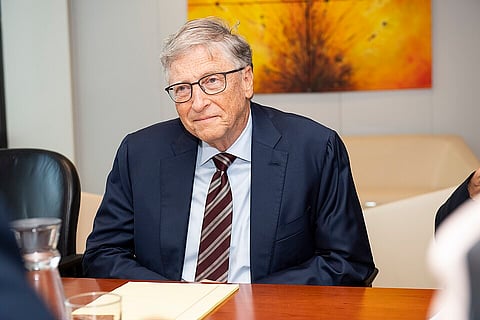


On June 10, 2026, Bill Gates, the co‑founder of Microsoft and one of the world’s most prominent philanthropists, appeared for a closed‑door transcribed interview before the US House Oversight and Government Reform Committee. The testimony, which marked the committee’s 15th interview in its ongoing investigation into the US Justice Department’s handling of the Jeffrey Epstein case, was both a mea culpa and a forceful denial. Gates admitted to a “grave error in judgment” in associating with the late convicted sex offender, but he vehemently rejected any suggestion that he was complicit in Epstein’s crimes or that their relationship was anything other than transactional, focused on fundraising for his foundation.
In his opening statement, Gates told lawmakers that he “did not fully understand the extent” of Epstein’s crimes when he began meeting with him after Epstein’s 2008 conviction for soliciting prostitution from a minor. “I never went to his island, his ranch, or his Florida home. I have never victimized anyone,” Gates said. He also stated that he never witnessed Epstein engaged in ongoing criminal conduct, nor had any indication of it. Crucially, Gates revealed that Epstein had tried to blackmail him over his extramarital affairs, using information about his personal life to pressure him to re-engage after Gates had tried to cut ties. “These affairs had nothing to do with my interactions with Epstein, but they were painful for my family,” Gates said. “Epstein was working to use information about my infidelities, in addition to many lies that he layered on top to pressure me to re-engage with him.”
Gates has consistently maintained that his association with Epstein, which began in 2011, was strictly about philanthropy. He told the committee that he made it clear from the outset that Epstein would never play a role in his foundation’s work or receive any compensation. “He was a friend collector,” Gates said, adding that he cut ties with Epstein when it became clear that Epstein could not deliver on the fundraising he had promised. However, documents released by the Justice Department this year indicated that Gates and Epstein met repeatedly after Epstein’s prison term, and that their correspondence included discussions about philanthropic projects, calendar entries documenting meeting dates, and photos of Gates at events also attended by Epstein. A 2011 email shows Epstein writing that he had dinner with Gates and his then‑wife Melinda. Perhaps most damagingly, flight logs show that Gates flew on Epstein’s private jet, often dubbed the “Lolita Express” in media reports from New Jersey to Florida in 2013. While Gates has acknowledged the flight, he has denied any wrongdoing and said he never visited Epstein’s infamous private island, Little St. James.
The most explosive elements of the released files were two draft emails that Epstein appears to have written to himself in July 2013. In these unsent, stream of consciousness messages, Epstein claimed that he had facilitated sexual encounters for Gates with Russian women and married women, that Gates had contracted a sexually transmitted infection, and that Gates had asked Epstein to supply antibiotics so that he could secretly treat his then wife Melinda. Gates has forcefully denied these claims, calling them “absolutely absurd and completely false.” A representative for Gates told CNN: “The only thing these documents demonstrate is Epstein’s frustration that he did not have an ongoing relationship with Gates and the lengths he would go to entrap and defame.”
Gates’ allegation of blackmail is consistent with a broader pattern of behavior that victims and associates have long attributed to Epstein. In her posthumous memoir, “Nobody’s Girl, A Memoir of Surviving Abuse and Fighting for Justice,” Virginia Giuffre, one of Epstein’s most prominent accusers wrote that Epstein regularly boasted that he could blackmail a powerful network of men using videos showing them abusing young women. “He’d always suggested to me that those videotapes he so meticulously collected in the bedrooms and bathrooms of his various houses gave him power over others,” Giuffre wrote. “He explicitly talked about using me and what I’d been forced to do with certain men as a form of blackmail, so these men would owe him favours.”
Epstein’s Manhattan home contained a safe with video and audio tapes, CDs, and hard drives, though the contents have never been fully made public. The existence of such a blackmail operation would help explain why so many powerful men continued to associate with Epstein even after his 2008 conviction.
The millions of pages, 2,000 videos, and 180,000 images released by the Justice Department in early 2026, mandated by the Epstein Files Transparency Act, have revealed the staggering breadth of Epstein’s network. Among the powerful figures whose names appear in the documents are US Presidents Donald Trump and Bill Clinton, Britain’s Prince Andrew, billionaire Elon Musk, former Trump adviser Steve Bannon, and Commerce Secretary Howard Lutnick. Trump, who socialized extensively with Epstein in the 1990s and 2000s, has said he had a “falling out” with Epstein and never visited his island. However, flight logs show Trump flew on Epstein’s plane seven times.
Clinton, who flew on Epstein’s plane multiple times, has denied knowing about Epstein’s crimes. Musk’s name appears in emails discussing potential visits to Epstein’s island, though Musk has publicly stated he never went. Prince Andrew’s name appears hundreds of times, and he has faced ongoing scrutiny over his friendship with Epstein. While none of these individuals have been charged with crimes related to Epstein, their association with him has raised persistent questions about what they knew and when.
The central question that remains unresolved is whether the powerful men in Epstein’s orbit, including Bill Gates were willingly complicit in his crimes or were simply duped by a master manipulator. Gates’ explanation, that he was focused on philanthropy and was unaware of Epstein’s criminal activities has been met with skepticism by some. Critics point out that Gates, a savvy businessman, continued to meet with Epstein for years after his 2008 conviction, at a time when Epstein’s status as a convicted sex offender was a matter of public record.
The emails and photos released by the Justice Department suggest a relationship that was more extensive than Gates has acknowledged. Yet, there is no evidence that Gates participated in or was aware of Epstein’s sexual abuse of minors. The House Oversight Committee’s investigation is ongoing, and Gates’ testimony, along with that of other powerful figures may yet shed more light on the nature of these relationships.
The Gates Foundation, which Gates co‑founded with his ex‑wife Melinda French Gates, has been mired in controversy over his association with Epstein. In April 2026, the foundation announced that it had opened an external review of its past engagement with Epstein, and that CEO Mark Suzman, with Gates’ support, was examining policies for vetting and developing new partnerships.
The foundation has also undergone a period of significant change, including plans to cut up to 500 positions and to close in 2045, earlier than previously expected. While Gates remains a towering figure in global health and development, the Epstein scandal has cast a long shadow over his legacy.