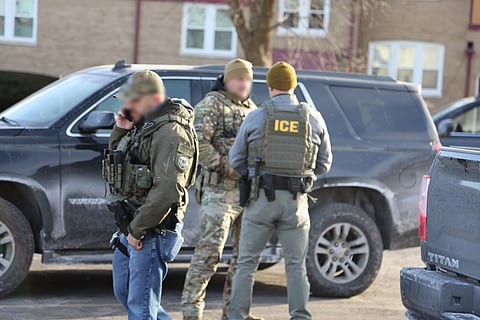


The administration of President Donald Trump has filed lawsuits against four Democratic-led states after they refused to issue confidential license plates for vehicles used by U.S. Immigration and Customs Enforcement agents.
The Department of Justice announced the legal action on Thursday, targeting Maine, Massachusetts, Oregon and Washington over policies that restrict or pause the issuance of undercover plates for federal immigration enforcement vehicles.
Federal officials argued the restrictions undermine immigration operations and place agents at risk during undercover activities linked to the administration’s mass deportation campaign.
The lawsuits claim the states are violating the U.S. Constitution’s Supremacy Clause by treating federal agencies differently from state and local law enforcement units that are granted confidential plates.
The Justice Department said undercover plates are essential for the “operational effectiveness and safety” of immigration agents conducting arrests and investigations.
Officials argued that using traceable public plates could expose agents to harassment, tracking and possible assaults during enforcement actions.
Acting U.S. Attorney General Todd Blanche accused the states of pursuing “discriminatory and obstructionist policies against federal law enforcement.”
The administration also maintained that confidential plates have long been issued to other agencies involved in undercover work and that denying them specifically to ICE interferes with federal responsibilities.
The lawsuits follow warning letters sent earlier this month by Assistant U.S. Attorney General Brett Shumate, who told state officials the administration would pursue legal action if the policies were not reversed.
Federal officials said ICE requires the protections because agents need to blend into local environments during operations.
The complaint against Massachusetts stated that visible or traceable plates could allow enforcement targets to evade arrest and compromise investigations.
Officials in the targeted states defended their decisions, arguing that ICE operations related to civil immigration enforcement should not receive the same protections as criminal investigations.
Massachusetts Governor Maura Healey said the state would not help ICE “operate in secret” while concerns persist over arrests involving U.S. citizens and lawful residents.
Healey also accused ICE of using aggressive tactics and failing to provide accountability regarding who is being detained and why.
In Oregon, state officials said the Department of Motor Vehicles temporarily paused issuing undercover plates to federal agencies while conducting a legal review.
Oregon officials added that federal vehicles can still operate in the state without Oregon-issued confidential plates.
The legal dispute is expected to intensify broader tensions between the Trump administration and Democratic-led states over immigration enforcement and the limits of state cooperation with federal authorities.