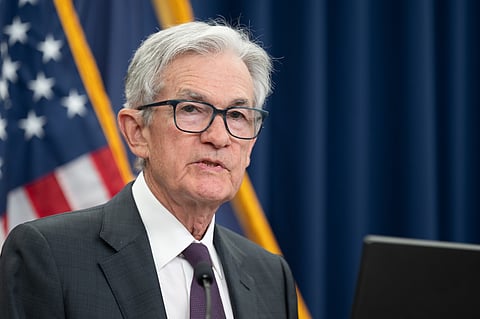


The Trump administration has escalated its confrontation with the Federal Reserve by threatening criminal charges against Chair Jerome Powell, intensifying a long-running dispute over interest rate policy and raising fresh concerns about the independence of the U.S. central bank.
The move follows subpoenas issued by the Justice Department related to Powell’s testimony to Congress last summer about cost overruns in a $2.5 billion renovation of the Fed’s Washington headquarters.
Powell said the investigation represents an unprecedented effort to exert pressure on monetary policy decisions, as financial markets reacted with rising Treasury yields, falling stock indexes, and record highs in gold prices.
Republican and Democratic lawmakers alike warned that the episode risks undermining confidence in both the Fed and the Justice Department.
Powell disclosed that the Fed received grand jury subpoenas last week, threatening a criminal indictment tied to his remarks before the Senate Banking Committee.
He said the action should be seen within a broader pattern of pressure from the White House to force interest rate cuts.
“This new threat is not about my testimony last June or about the renovation of the Federal Reserve buildings,” Powell said, describing the inquiry as a pretext for political influence.
President Donald Trump told NBC News he had no knowledge of the Justice Department’s actions and criticized Powell’s performance as Fed chair.
The Justice Department declined to comment on the specifics of the case, saying only that it is prioritizing investigations into potential misuse of taxpayer funds.
The threat comes as Trump continues to demand sharply lower rates, arguing high borrowing costs are harming affordability for Americans.
The development drew swift reaction on Capitol Hill.
Republican Senator Thom Tillis said he would block any Trump nominees to the Fed until the legal matter is resolved, citing concerns over the Justice Department’s credibility.
Democratic Senator Elizabeth Warren said the administration was attempting to force Powell out to reshape the central bank.
Markets reacted cautiously but defensively, with investors weighing the implications of diminished Fed independence for inflation control.
Powell, whose term as chair ends in May, is not required to leave the Fed’s board until 2028, and analysts said the confrontation could further complicate the transition.
The dispute unfolds as the administration also faces a Supreme Court case over its attempt to remove another Fed governor, underscoring a widening struggle over control of U.S. monetary policy.