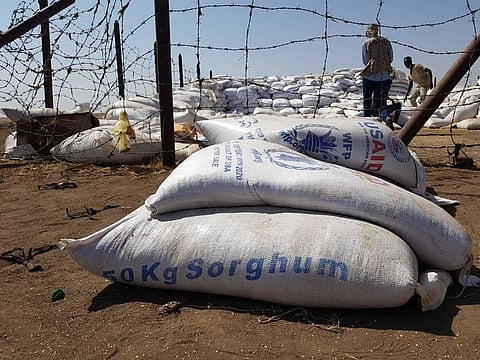


The United States has pledged $2 billion in humanitarian assistance to United Nations programs, even as the Trump administration continues to sharply reduce overall foreign aid and press for structural reforms across the world body.
Announced in Geneva, the pledge is far smaller than previous annual U.S. contributions, which have reached as high as $17 billion, but officials described it as a recalibrated approach aimed at preserving U.S. influence while demanding greater efficiency.
The funding will be channeled through a new umbrella arrangement rather than distributed directly to individual agencies, a shift that has unsettled humanitarian groups already facing widespread cuts.
U.S. officials say the move reflects fiscal realities and a belief that consolidated oversight can deliver aid more effectively.
The $2 billion pledge comes after a year of sweeping reductions in U.S. foreign assistance, contributing to what United Nations officials describe as a severe funding crisis.
According to U.N. data, U.S. humanitarian contributions fell to about $3.38 billion in 2025, down sharply from $14.1 billion the previous year.
Other major Western donors have also reduced aid spending, further straining agencies responsible for food aid, migration, and refugee assistance.
As needs have grown due to conflict, displacement, and natural disasters, several U.N. organizations have cut programs and eliminated thousands of jobs.
U.N. aid chief Tom Fletcher has warned that limited resources are forcing difficult decisions, with only the most urgent crises prioritized.
Under the new arrangement, the United Nations Office for the Coordination of Humanitarian Affairs will oversee how U.S. funds are allocated across agencies and crises.
U.S. officials have said this structure is intended to reduce duplication, curb overhead, and align humanitarian spending more closely with policy objectives.
Seventeen countries will be targeted initially, including Bangladesh, Haiti, Syria, and Ukraine, while others will be addressed through separate funding streams.
The State Department said the agreement requires agencies to “adapt, shrink, or die,” underscoring the administration’s demand for change.
Fletcher welcomed the pledge, calling it “a landmark investment in humanity,” and said it signaled confidence in ongoing reform efforts.