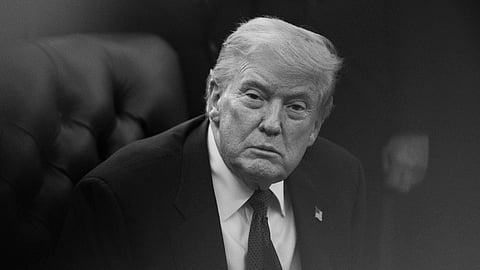


The United States Supreme Court on Friday struck down President Donald Trump’s sweeping tariffs imposed under emergency powers, setting off a complex refund process at home and prompting swift reactions from governments abroad.
In a 6-3 decision, the court ruled that Trump’s use of the 1977 International Emergency Economic Powers Act to levy double-digit tariffs on nearly every country exceeded presidential authority, stating that the power to tax imports rests with Congress.
The decision invalidates tariffs that have generated $133 billion in revenue as of mid-December, leaving unresolved how the government will handle refund claims from importers.
Trump responded by announcing a new 10 percent global tariff through an executive order, saying it would take effect “almost immediately,” while criticizing the court’s ruling and predicting extended litigation.
Trade lawyers and analysts say companies are likely to receive refunds, but the process could take 12 to 18 months and unfold across multiple courts and federal agencies.
“It’s going to be a bumpy ride for awhile,” said Joyce Adetutu, a partner at Vinson & Elkins.
Justice Brett Kavanaugh, in dissent, warned that “the refund process is likely to be a ‘mess.’”
Importers including Costco, Revlon and Bumble Bee Foods had already filed lawsuits seeking repayment.
State officials have also moved to recover funds.
Illinois Gov. JB Pritzker has demanded $8.7 billion on behalf of households in his state, while Nevada Treasurer Zach Conine requested $2.1 billion, stating, “As Nevada’s chief investment officer, I have a responsibility to try to recoup every single dollar that the Trump Administration takes from Nevada families.”
Consumers, however, are unlikely to see direct refunds for higher prices passed on by companies.
Governments worldwide are reassessing trade arrangements in light of the ruling and Trump’s new tariff order.
South Korea said it would review its November trade deal with Washington, which had reduced tariffs in exchange for $350 billion in investment commitments.
India, which recently negotiated lower tariff rates on key exports, is weighing how the ruling affects its interim agreement.
China issued a statement saying trade wars benefit nobody, as analysts estimate its overall tariff burden could fall.
Canada welcomed the decision but noted that steel and aluminum tariffs remain.
Mexico said it would study the ruling’s scope while monitoring future U.S. actions.
Legal experts say the decision underscores constitutional limits on executive power, marking a significant moment in the broader debate over trade and presidential authority.