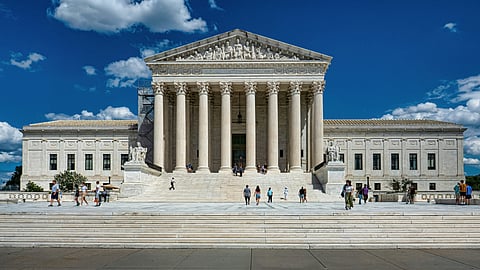


The United States Supreme Court on Friday struck down President Donald Trump’s sweeping global tariffs, delivering a major setback to a central pillar of his economic agenda and curbing his use of emergency powers to impose import taxes without congressional approval.
In a 6-3 ruling authored by Chief Justice John Roberts, the court upheld a lower court decision finding that Trump exceeded his authority by invoking the 1977 International Emergency Economic Powers Act to levy tariffs on nearly every US trading partner.
The decision marks the first major element of Trump’s second-term agenda to be squarely addressed by the nation’s highest court.
The majority concluded that the Constitution grants Congress, not the president, the authority to impose taxes, including tariffs.
“The Framers did not vest any part of the taxing power in the Executive Branch,” Roberts wrote.
Citing precedent, he added that the president must “point to clear congressional authorization” to justify such actions and concluded, “He cannot.”
Justices Samuel Alito, Clarence Thomas and Brett Kavanaugh dissented.
“The tariffs at issue here may or may not be wise policy. But as a matter of text, history, and precedent, they are clearly lawful,” Kavanaugh wrote.
The ruling stemmed from legal challenges brought by small businesses and 12 states, most led by Democrats, arguing that the emergency powers law does not authorize tariffs.
The court’s majority also referenced the major questions doctrine, emphasizing that Congress must clearly authorize actions of vast economic and political significance.
Trump’s tariffs had been forecast to generate trillions of dollars over the next decade and were central to a widening global trade conflict initiated after he began his second term.
Federal data shows the Treasury collected more than $133 billion under the emergency powers law as of December, while economists estimated collections could exceed $175 billion.
The court did not address whether companies will receive refunds, though several, including Costco, have sought repayment in lower courts.
Kavanaugh noted that any refund process could be complicated and potentially disruptive.
The decision does not prevent Trump from pursuing tariffs under other statutory authorities, though those avenues impose greater procedural limits.
Administration officials have indicated they will seek alternative legal justifications to preserve much of the existing tariff framework.
President Trump called the ruling “a disgrace,” according to a person familiar with his reaction.
The European Commission said it remains in close contact with US officials as it seeks clarity on next steps.